a Cold-Process Charcoal Facial Soap for Deep Cleansing, Acne Control & Sebum Regulation recipe
Facial cleansing requires a precise balance: removing excess sebum, cellular debris, and environmental pollutants without disrupting the skin’s natural moisture barrier or causing reactive hyper-seborrhea. Traditional commercial detergent bars and synthetic surfactant syndet bars often rely on harsh sulfates that strip epidermal lipids, leaving the skin tight, dehydrated, and susceptible to barrier degradation.
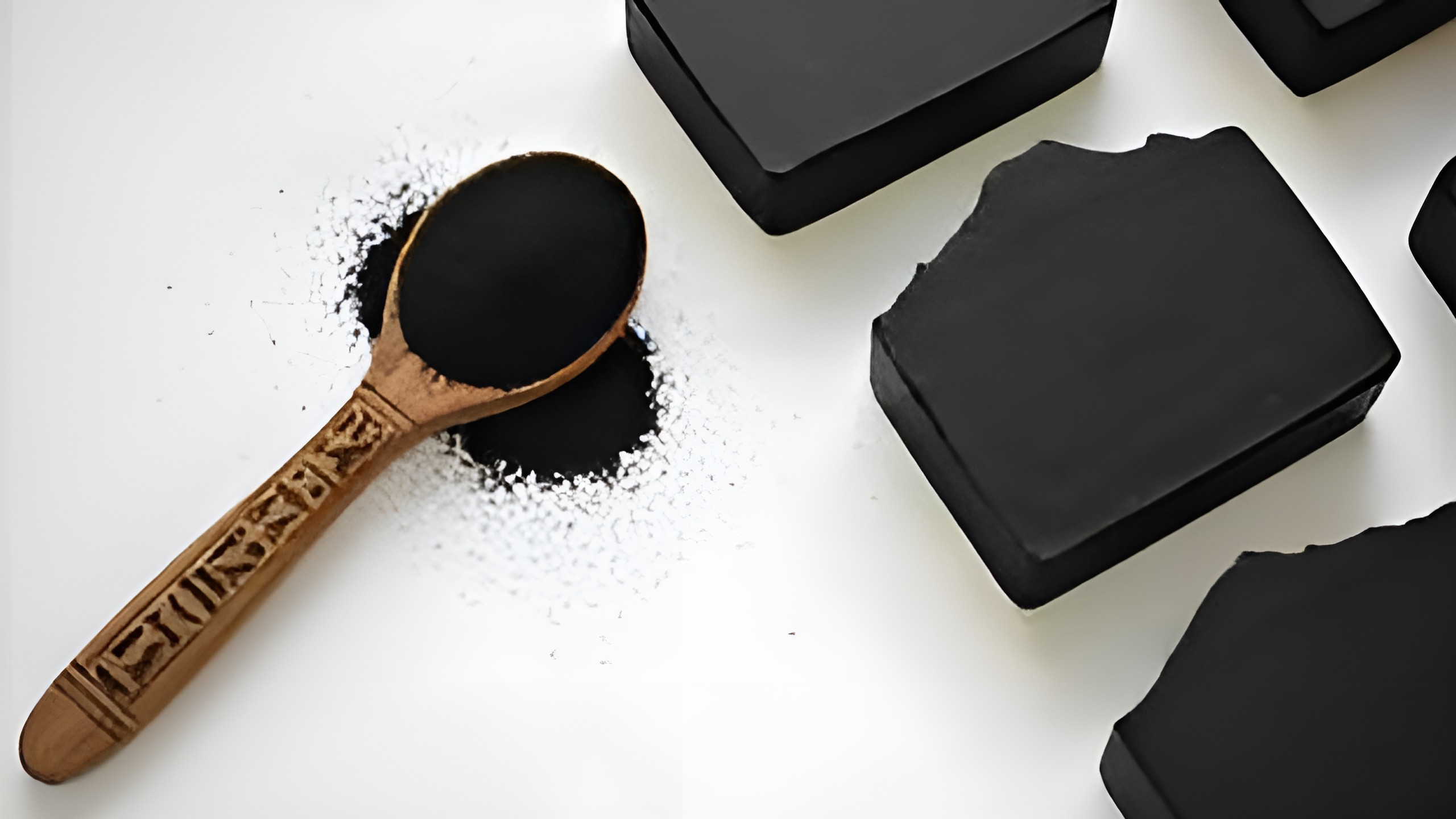
1. Introduction & The Evolution of Cold-Process Activated Charcoal Soap
In professional cosmetic formulation, Cold-Process (CP) Saponification offers a superior technique for crafting luxury facial cleansing bars. Unlike hot-process or melt-and-pour methods, cold-process manufacturing combines plant lipids with sodium hydroxide at controlled low temperatures. This reaction preserves un-saponified unsaponifiables, natural antioxidants, and heat-sensitive essential fatty acids.
This Cold-Process Activated Charcoal Facial Soap leverages the microporous absorption capacity of activated charcoal alongside a balanced lipid profile featuring Olive, Coconut, Castor, and Sweet Almond oils, enriched with Shea and Cocoa butters. Elevated with Tea Tree essential oil, this bar provides deep follicular cleansing, reduces comedone formation (blackheads and whiteheads), regulates sebum production, and calms acne inflammation—all while maintaining epidermal hydration through naturally generated glycerin.
2. In-Depth Active Ingredient Profiles & Master Formulation Table
Formulating a high-performance cold-process facial soap requires adjusting the fatty acid ratios (Lauric, Myristic, Palmitic, Stearic, Oleic, and Ricinoleic acids) to achieve effective cleansing, stable creamy lather, optimal bar hardness, and skin mildness.
Master Formulation Table
| Phase | Ingredient Name | Botanical / INCI Name | Weight Ratio (Grams) | Percentage (% w/w) | Primary Functional Role |
| A (Lye Solution) | Distilled Water | Aqua | 275.0 g | 25.32% | Lye Solvent & Saponification Medium |
| A (Lye Solution) | Sodium Hydroxide (Lye) | Sodium Hydroxide | 135.0 g | 12.43% | Saponifying Agent (99% Purity) |
| B (Lipid Phase) | Extra Virgin Olive Oil | Olea Europaea Fruit Oil | 350.0 g | 32.23% | Conditioning Base & Oleic Acid Source |
| B (Lipid Phase) | Coconut Oil | Cocos Nucifera Oil | 300.0 g | 27.63% | Cleansing Agent & Hardness Booster |
| B (Lipid Phase) | Deodorized Shea Butter | Butyrospermum Parkii Butter | 200.0 g | 18.42% | Barrier Repair & Superfatting Emollient |
| B (Lipid Phase) | Castor Oil | Ricinus Communis Seed Oil | 100.0 g | 9.21% | Lather Sustainer & Humectant |
| B (Lipid Phase) | Raw Cocoa Butter | Theobroma Cacao Seed Butter | 50.0 g | 4.61% | Structural Hardener & Skin Protective |
| C (Active Additive) | Activated Charcoal Powder | Charcoal Powder | 15.0 g | 1.38% | Microporous Adsorbent & Exfoliator |
| D (Aromatic Phase) | Tea Tree Essential Oil | Melaleuca Alternifolia Leaf Oil | 15.0 g | 1.38% | Antimicrobial & Anti-Acne Active |
| Total Batch | 1,086.0 g | 100.00% | Complete Saponified Soap Matrix |
Botanical Active & Phytochemical Analysis
- Activated Charcoal Powder (Charcoal Powder): Produced via high-temperature steam activation of organic coconut shells, yielding a high specific surface area. It adsorbs micro-pollutants, trapped sebum, and bacterial toxins from pores without abrading the skin.
- Extra Virgin Olive Oil (Olea Europaea): High in Oleic Acid (Omega-9) and squalene. Saponified olive oil forms Sodium Oleate, providing gentle cleansing while preserving the natural skin barrier.
- Coconut Oil (Cocos Nucifera): Rich in Lauric (C12) and Myristic (C14) fatty acids. It produces Sodium Laurate, creating a fluffy lather with effective cleansing properties that wash away oxidized lipids.
- Deodorized Shea Butter (Butyrospermum Parkii): High in Stearic and Oleic acids, with a rich unsaponifiable fraction (phytosterols, triterpenes). It hardens the bar and provides deep conditioning.
- Castor Oil (Ricinus Communis): Unique for its high Ricinoleic Acid (~90%) content. It acts as a natural lather stabilizer, creating a dense, rich foam that buffers against skin dryness.
- Tea Tree Essential Oil (Melaleuca Alternifolia): Rich in Terpinen-4-ol, alpha-terpineol, and alpha-pinene. Terpinen-4-ol provides strong antimicrobial activity against Cutibacterium acnes, reducing acne lesion severity and calming redness.
3. Laboratory Setup, PPE Standards & Safety SOPs
Cold-process soap making uses Sodium Hydroxide (Lye), an inorganic compound that generates an exothermic reaction when dissolved in water, reaching temperatures up to 80°C–90°C and producing alkaline vapors. Strict safety protocols are mandatory.
Standard Safety & Sanitization Protocol (SOP):
- Personal Protective Equipment (PPE): Formulators must wear chemical splash goggles, full-arm nitrile gloves, a long-sleeved apron, long pants, closed-toe footwear, and an organic vapor/particulate respirator mask.
- Lye Preparation Rules: ALWAYS ADD SODIUM HYDROXIDE TO WATER—NEVER ADD WATER TO SODIUM HYDROXIDE. Adding water to solid lye can cause heat spikes and violent boiling splashes.
- Ventilation: Dissolve lye under a dedicated fume hood or in a well-ventilated outdoor area to avoid inhaling caustic steam.
- Equipment Compatibility: Use only heavy-duty Heat-Resistant Polypropylene (PP, Recycle Code 5), High-Density Polyethylene (HDPE, Code 2), or Stainless Steel. Avoid aluminum, tin, zinc, or glass for mixing lye, as alkali corrodes non-ferrous metals and causes thermal shock breakage in glass.
4. Step-by-Step Manufacturing Protocol & Saponification Trace
Cold-process manufacturing relies on bringing the lye solution and the melted lipid blend to matching temperatures before emulsification.
Step 1: Lye Solution Preparation
- Wear full PPE. Measure 275.0g of distilled water into a heat-resistant PP container placed on a digital scale.
- Weigh 135.0g of Sodium Hydroxide (99% pure pellets) into a dry PP beaker.
- Slowly pour the Sodium Hydroxide into the distilled water while stirring continuously with a silicone spatula until completely dissolved.
- Set the lye solution aside in a secure location to cool from ~85°C down to 40°C–45°C.
Step 2: Lipid & Butter Melting Phase
- Weigh hard butters (200.0g Shea Butter, 50.0g Cocoa Butter) and solid oils (300.0g Coconut Oil) into a large stainless steel bowl or PP beaker.
- Melt gently over a Bain-Marie (water bath) at low heat (50°C–55°C).
- Remove from heat and stir in liquid oils (350.0g Extra Virgin Olive Oil, 100.0g Castor Oil).
- Measure the temperature of the oil blend and allow it to cool down to 40°C–45°C.
Step 3: Temperature Matching & Emulsification (Trace)
- Using an infrared thermometer, confirm both the lye solution and the oil phase are within 40°C–45°C (ideally within 5°C of each other).
- Carefully pour the cooled lye solution into the oil mixture.
- Submerge an immersion stick blender completely to avoid trapping air bubbles. Pulse in short 10-second bursts, alternating with manual stirring, until reaching a Light Trace (a light, thin custard-like consistency where dripped batter rests briefly on the surface).
Step 4: Active Incorporation
- Add 15.0g of Activated Charcoal Powder to the batter. Blend with the stick blender on low speed until uniformly black and free of powder pockets.
- Add 15.0g of Tea Tree Essential Oil. Mix manually with a spatula to disperse without accelerating trace into a thick paste.
Step 5: Molding, Gel Phase Control & Unmolding
- Pour the fluid charcoal soap batter into a sanitized silicone loaf mold.
- Tap the mold firmly on the counter to release trapped air bubbles. Spray the exposed top surface with 70% Isopropyl Alcohol to prevent soda ash formation ($Na_2CO_3$).
- Cover the mold loosely with parchment paper and insulate with a towel for 24 hours to allow saponification to complete (passing through the natural thermal Gel Phase).
Step 6: Cutting & Curing Phase
- After 24 to 36 hours, once the bar is hard, unmold the block.
- Slice into individual 100g to 120g soap bars using a wire cutter or stainless steel soap blade.
- Place the cut bars on wooden drying racks in a well-ventilated, low-humidity room away from direct sunlight.
- Cure for 4 to 6 weeks. This curing period allows remaining water to evaporate, yielding a mild, firm bar with a stable pH range (~8.5–9.5).
5. Commercial Batch Scaling & Unit Costing Analysis
To scale this formulation from a 1,086g laboratory trial up to a commercial 100 Kilogram (100,000g) production run, use the percentage calculations (% w/w) below.
| Ingredient | Percentage (% w/w) | 100 kg Commercial Batch Weight | Functional Material Category |
| Extra Virgin Olive Oil | 32.23% | 32.23 kg | Base Lipid / Barrier Conditioner |
| Coconut Oil | 27.63% | 27.63 kg | Lather & Hardness Agent |
| Distilled Water | 25.32% | 25.32 kg | Lye Solvent Medium |
| Deodorized Shea Butter | 18.42% | 18.42 kg | Superfatting Emollient |
| Sodium Hydroxide (Lye) | 12.43% | 12.43 kg | Saponifying Alkaline Agent |
| Castor Oil | 9.21% | 9.21 kg | Creamy Foam Sustainer |
| Raw Cocoa Butter | 4.61% | 4.61 kg | Bar Structural Hardener |
| Activated Charcoal | 1.38% | 1.38 kg | Deep Pore Adsorbent Active |
| Tea Tree Essential Oil | 1.38% | 1.38 kg | Antimicrobial & Anti-Acne Active |
| Total Production Batch | 100.00% | 100.00 kg | Master Production Yield |
6. Troubleshooting Common Formulation Defects
| Physical Defect | Root Cause | Preventive Formulation Correction |
| White Powder on Top (Soda Ash) | Free Sodium Hydroxide reacting with ambient $CO_2$ at the unsealed surface. | Spray top of freshly poured soap with 70% Isopropyl Alcohol; cover mold to insulate during saponification. |
| Soft, Sticky, or Mushy Bar After 48 Hours | Excess water, low hard oil ratio, or incomplete saponification caused by temperature drops. | Maintain oil/lye temperatures at 40°C–45°C; increase Cocoa Butter by 2% or decrease water percentage slightly. |
| Brittle, Crumbly Bar when Sliced | Excessive Sodium Hydroxide, insufficient discount (superfat), or cutting the bar too late. | Recalculate lye purity; maintain a 5%–8% superfat ratio; cut soap within 24–36 hours of pouring. |
| Oil Separation in Mold (False Trace) | Mixing at incompatible temperatures or under-mixing before pouring. | Ensure lye and oils are within 5°C of each other; blend to a true medium trace state before pouring. |
7. Comprehensive Formulator FAQ Section
Q1: Is the Sodium Hydroxide (Lye) safe for facial skin in the final bar?
Yes. During cold-process saponification, Sodium Hydroxide reacts completely with the triglyceride fatty acid chains in the plant oils, converting 100% of the lye into pure soap salts (Sodium Oleate, Sodium Laurate, etc.) and natural moisturizing glycerin. Zero unreacted Sodium Hydroxide remains in the fully cured bar.
Q2: Will Activated Charcoal stain towels or skin during washing?
No. At a concentration of 1.38% w/w, the micro-fine charcoal rinses clean off the skin without leaving residual pigment. Any dark foam produced during lathering rinses away completely with water.
Q3: Can this soap bar be used on sensitive or dry skin types?
This formulation is designed primarily for oily, combination, and acne-prone skin. For ultra-sensitive or extremely dry skin, increase the superfat level (free oil content) to 8%–10% by increasing the Shea Butter ratio, or reduce usage frequency to 2 times per week.
🎥 Source Reference
Formulation protocol adapted from Dr Dewi on YouTube: