
Oily Henna Hair Mask for Hair Density, Elongation & Dandruff Control Recipe
For thousands of years—dating back to ancient Egyptian royalty who combined Lawsonia inermis with plant oils like olive and lotus oil—Henna has been revered as an indispensable cosmetic active for hair preservation, structural reinforcement, and natural coloration. Traditionally, consumers apply henna as an aqueous, water-activated mud mask. While traditional wet masks deliver intense botanical benefits, they present major modern cosmetic drawbacks: high risk of severe shaft dryness, messy application, rapid microbial spoilage when stored, and a lengthy, tedious preparation process.
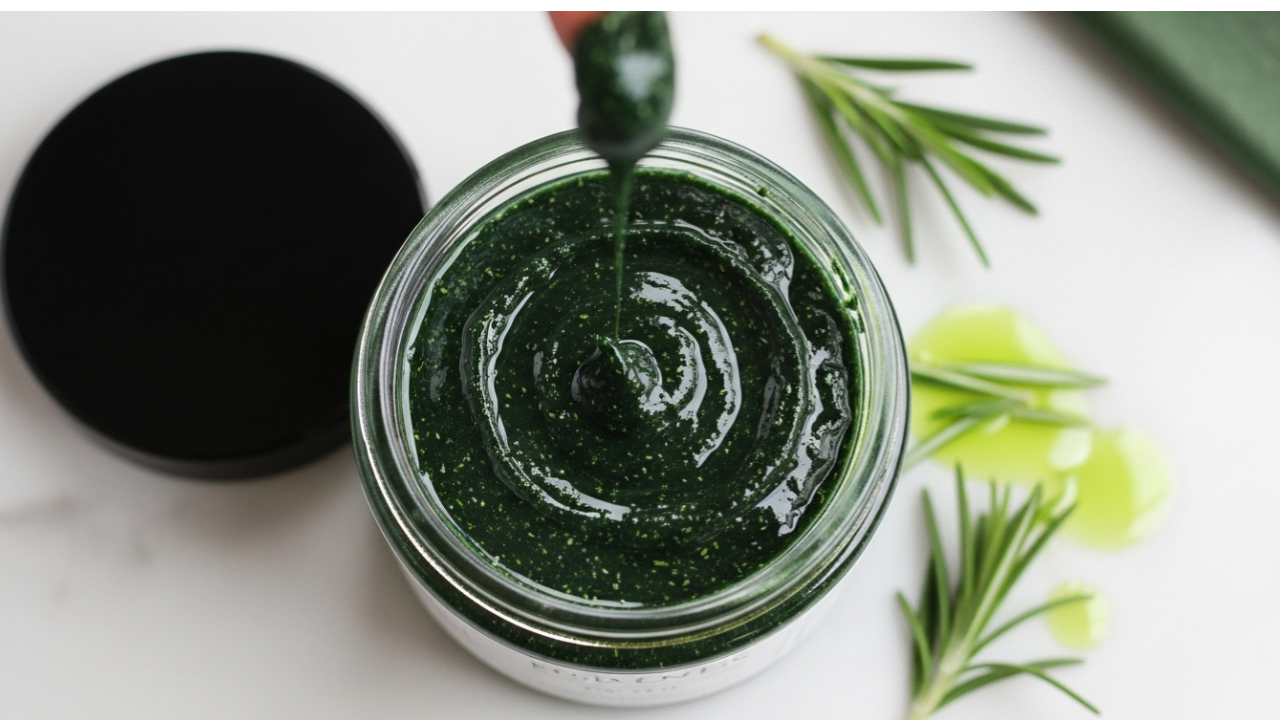
1. Introduction & The Evolution of Anhydrous Herbal Paste Formulations
To overcome these commercial and practical limitations, modern cosmetic research has advanced toward Anhydrous Oily Henna Masks (Henna Paste in Oil / Oily Henna Paste Matrix). By dispersing finely micronized henna and synergulator herbs directly within a non-comedogenic lipid matrix (comprising Jojoba, Sweet Almond, and Mustard Seed oils), the botanical powders remain suspended, stable, and completely water-free during storage.
When applied, the lipid phase forms a film over the hair cuticle to lock in internal lipid moisture, preventing the harsh straw-like texture often caused by traditional henna. Simultaneously, the lipid phase transports lipophilic active compounds (such as lawsone, eugenol, and carnosic acid) deep into the follicular infundibulum. This dual-action approach reinforces structural keratin, purifies the scalp from fungal pathogens, and stimulates microcirculation.
This guide provides a complete professional formulation blueprint for manufacturing a shelf-stable, commercial-grade Oily Henna Hair Mask. It covers active botanical chemistry, INCI composition, percentage master tables, sanitary laboratory standards (SOPs), mechanical whipping manufacturing steps, batch-scaling calculations, troubleshooting protocols, and formulator FAQs.
2. In-Depth Active Ingredient Profiles & Master Formulation Table
Formulating a commercial oily henna paste matrix requires balancing physical powder suspension with lipid viscosity, microvascular stimulation, and oxidation protection.
Master Formulation Table
| Phase | Ingredient Name | Botanical / INCI Name | Percentage (% w/w) | Master Weight (100g Batch) | Primary Cosmetic Function |
| A (Botanical Powder Phase) | Henna Powder | Lawsonia Inermis Leaf Powder | 70.0% | 70.0 g | Primary Keratin Binder & Astringent Active |
| A (Botanical Powder Phase) | Sidr Powder | Ziziphus Spina-Christi Leaf Powder | 2.5% | 2.5 g | Natural Saponin Cleanser & Volumizer |
| A (Botanical Powder Phase) | ShikaKai Powder | Acacia Concinna Fruit Powder | 2.0% | 2.0 g | Scalp Purifier & Conditioning Active |
| A (Botanical Powder Phase) | Amla Powder | Emblica Officinalis Fruit Powder | 2.0% | 2.0 g | Vitamin C Tonic & Melanocytes Enhancer |
| A (Botanical Powder Phase) | Moringa Powder | Moringa Oleifera Leaf Powder | 1.5% | 1.5 g | Amino Acid Complex & Protein Active |
| A (Botanical Powder Phase) | Basil (Habak) Powder | Ocimum Basilicum Leaf Powder | 1.5% | 1.5 g | Anti-hair loss Active & Microcirculatory Agent |
| A (Botanical Powder Phase) | Olive Leaf Powder | Olea Europaea Leaf Powder | 1.0% | 1.0 g | Antioxidant & Hydration Preserver |
| A (Botanical Powder Phase) | Rose Petal Powder | Rosa Centifolia Flower Powder | 1.0% | 1.0 g | Soothing Anti-inflammatory & Fragrance |
| A (Botanical Powder Phase) | Lavender Flower Powder | Lavandula Angustifolia Flower Powder | 1.0% | 1.0 g | Calming Anti-fungal & Stress Relief |
| A (Botanical Powder Phase) | Rosemary Leaves | Rosmarinus Officinalis Leaf Powder | 0.9% | 0.9 g | Vascular Stimulant & Follicle Tonic |
| A (Botanical Powder Phase) | Clove Powder | Syzygium Aromaticum Flower Powder | 0.5% | 0.5 g | Antiseptic & Eugenol-Rich Stimulant |
| A (Botanical Powder Phase) | Hibiscus Petals | Hibiscus Rosa-Sinensis Flower Powder | 0.5% | 0.5 g | AHA Exfoliator & Shine Enhancer |
| A (Botanical Powder Phase) | Date Seed Powder | Phoenix Dactylifera Seed Powder | 0.5% | 0.5 g | Fatty Acid Booster & Root Fortifier |
| A (Botanical Powder Phase) | Black Seed (Nigella) | Nigella Sativa Seed Powder | 0.5% | 0.5 g | Nigellone Active & Follicle Repair |
| B (Lipid Phase) | Sweet Almond or Jojoba Oil | Prunus Amygdalus Dulcis / Simmondsia Chinensis Oil | 9.9% | 9.9 g | Non-greasy Carrier Lipid Matrix |
| B (Lipid Phase) | Mustard Seed Oil | Brassica Juncea Seed Oil | 3.0% | 3.0 g | Thermal Vascular Heating Active |
| B (Lipid Phase) | BHT (Commercial) | Butylated Hydroxytoluene | 0.2% | 0.2 g | Synthetic Lipid Anti-Rancidity Inhibitor |
| C (Cool Down Active Phase) | Vitamin E | Tocopherol | 1.0% | 1.0 g | Free Radical Scavenger & Antioxidant |
| C (Cool Down Active Phase) | Oil-Soluble Preservative | Phenoxyethanol (and) Ethylhexylglycerin | 1.0% | 1.0 g | Broad-Spectrum Antimicrobial Guard |
| Total | 100.0% | 100.0 g | Complete Anhydrous Paste Matrix |
Botanical Active & Phytochemical Analysis
- Henna Powder (Lawsonia inermis): Contains Lawsone (2-hydroxy-1,4-naphthoquinone), condensed tannins, and gallic acid. Lawsone cross-links with hair shaft keratin via hydrogen bonding, filling structural gaps, coating the cuticle layer, increasing tensile strength, and imparting a rich natural auburn tone.
- Shikakai Powder (Acacia Concinna): High in natural triterpenoid saponins, flavonoids, and Vitamin C. Shikakai acts as a low-pH natural surfactant and cleansing agent that eliminates sebum build-up without stripping the hair’s protective acid mantle or causing cuticle flaking.
- Amla Powder (Emblica Officinalis): Concentrated in gallic acid, ellagitannins, and ascorbic acid. Amla functions as a potent 5-alpha reductase inhibitor, regulating DHT-induced follicle miniaturization while preventing premature graying by supporting follicular melanocytes.
- Moringa Powder (Moringa Oleifera): Rich in essential amino acids (methionine and cysteine), iron, and Vitamin A. Moringa repairs damaged keratin networks within the cortex, increases strand thickness, and improves elasticity.
- Sweet Almond Oil (Prunus Amygdalus Dulcis) / Jojoba Oil (Simmondsia Chinensis): Serves as an emollient base. Jojoba’s liquid wax ester profile closely mirrors human sebum, softening coarse powder particles and ensuring smooth application without leaving a greasy residue.
- Mustard Seed Oil (Brassica Juncea): High in allyl isothiocyanate, omega-3, and omega-6 fatty acids. Mustard seed oil generates a gentle warming action on the scalp, dilating peripheral micro-vessels to increase nutrient flow to active hair roots.
- Oil-Soluble Preservative & BHT System: BHT prevents oxidative rancidity in double-bond lipid chains, while the oil-soluble broad-spectrum preservative prevents microbial, yeast, and mold growth if water is introduced during consumer use.
3. Laboratory Setup, PPE Standards & Sanitization SOPs
Because botanical powders carry high initial microbial loads (spores and ambient bacteria), maintaining clean laboratory protocols is essential to prevent batch spoilage.
Standard Operating Sanitization Protocol (SOP):
- Air & Environment Preparation: Close external ventilation ducts to prevent draft-induced powder dispersion. Sanitize stainless steel work surfaces with 70% Isopropyl Alcohol (IPA) and allow 3 minutes contact time for full microbial knockdown.
- Personal Protective Equipment (PPE): Staff must wear N95 particulate respirators to avoid inhaling fine herbal dust, along with powder-free nitrile gloves, safety goggles, and hair covers.
- Dry Equipment Sterilization: All mixing blades, planetary beaters, sifting screens, and glass/stainless steel vessels must be thoroughly washed with hot deionized water and soap, rinsed with 70% IPA, and dried thoroughly. Water contamination must be completely avoided, as even trace moisture can trigger premature lawsone release, powder clumping, or microbial growth.
4. Step-by-Step Manufacturing Protocol & Mechanical Homogenization
Manufacturing an oily henna hair mask requires a specific addition order: gentle heating of the lipid base, fine sifting of dry botanical powders, and mechanical whipping to form a smooth, homogenous paste.
Step 1: Lipid Phase Assembly & Solubilization
- Weigh out Phase B lipids (9.9g Sweet Almond or Jojoba Oil, 3.0g Mustard Seed Oil) in a heat-resistant stainless steel vessel.
- Place the vessel in a gentle Bain-Marie (water bath) and heat to 45°C–50°C.
- Add 0.2g BHT to the warm lipid phase. Stir continuously with a glass rod until BHT crystals are completely dissolved. Remove from heat.
Step 2: Botanical Micronization & Sifting
- Weigh out all Phase A botanical powders individually on a 0.01g digital balance.
- Pass the combined Phase A powders through a 100-mesh stainless steel sieve into a sterile bowl. Sifting breaks up aggregates, removes coarse fibrous particles, and ensures a smooth, non-gritty paste texture.
- Blend the sifted dry powders with a whisk until uniformly dispersed.
Step 3: Cool-Down Actives Addition
- Monitor the Phase B lipid temperature until it cools to below 35°C.
- Add 1.0g Tocopherol (Vitamin E) and 1.0g Oil-Soluble Preservative to the cooled oil phase. Stir thoroughly for 2 minutes to homogenize.
Step 4: Lipid-Powder Dispersion & High-Shear Whipping
- Slowly pour the liquid active phase into the sifted herbal powder mixture.
- Mix manually with a heavy-duty spatula to wet out the powders.
- Transfer the batch to a planetary stand mixer or high-shear cream mixer fitted with a paddle or whip attachment.
- Whip the paste at medium-high speed for 8 to 10 minutes until a rich, cohesive, glossy, non-gritty oily paste is formed.
Step 5: Package & Quality Control
- Fill the finished paste into pre-sterilized wide-mouth amber PET jars using an automated paste filler or sanitized piping system.
- Apply induction foil seals to the jar openings to block moisture and preserve shelf stability. Cap tightly.
5. Commercial Batch Scaling & Unit Costing Analysis
To scale this formula from laboratory trials to a commercial 100 Kilogram (100,000g) production run, convert percentages to master batch weights (% w/w).
| Ingredient | Percentage (% w/w) | 100 kg Industrial Batch | Functional Raw Material Category |
| Henna Powder | 70.0% | 70.0 kg | Botanical Structure & Keratin Active |
| Sweet Almond / Jojoba Oil | 9.9% | 9.9 kg | Lipid Emollient Carrier Matrix |
| Mustard Seed Oil | 3.0% | 3.0 kg | Scalp Heating & Vascular Active |
| Sidr Powder | 2.5% | 2.5 kg | Natural Cleansing Saponin Active |
| Shikakai Powder | 2.0% | 2.0 kg | Low-pH Scalp Conditioner |
| Amla Powder | 2.0% | 2.0 kg | Vitamin C & Melanocyte Support |
| Moringa Powder | 1.5% | 1.5 kg | Amino Acid Cortex Repair |
| Basil (Habak) Powder | 1.5% | 1.5 kg | Follicular Anti-Fall Tonic |
| Rosemary Leaves Powder | 0.9% | 0.9 kg | Vascular Circulatory Stimulant |
| Olive Leaf Powder | 1.0% | 1.0 kg | Polyphenol Antioxidant |
| Rose Petal Powder | 1.0% | 1.0 kg | Anti-Inflammatory Soothing Active |
| Lavender Flower Powder | 1.0% | 1.0 kg | Antifungal & Aromatic Active |
| Vitamin E (Tocopherol) | 1.0% | 1.0 kg | Lipid Anti-Oxidant System |
| Oil-Soluble Preservative | 1.0% | 1.0 kg | Broad-Spectrum Antimicrobial Guard |
| Clove Powder | 0.5% | 0.5 kg | Antiseptic Eugenol Active |
| Hibiscus Petals Powder | 0.5% | 0.5 kg | Organic AHA Cuticle Exfoliator |
| Date Seed Powder | 0.5% | 0.5 kg | Root Strengthening Lipid |
| Black Seed (Nigella) Powder | 0.5% | 0.5 kg | Nigellone Active Repair |
| BHT (Commercial Grade) | 0.2% | 0.2 kg | Synthetic Anti-Rancidity Inhibitor |
| Total Production Batch | 100.0% | 100.0 kg | Master Commercial Batch |
6. Troubleshooting Common Formulation Defects
| Physical Defect | Root Cause | Preventive Formulation Correction |
| Oil Phase Separation (Syneresis) | Insufficient lipid-powder binding or low batch viscosity under temperature changes. | Pass raw herbal powders through a finer 100-mesh sieve, or increase whipping duration to improve oil suspension. |
| Hard, Clay-like Paste Texture | Insufficient lipid carrier phase; high powder absorption ratio. | Increase Sweet Almond/Jojoba Oil content by 1.0–2.0% while slightly reducing henna powder percentage. |
| Gritty, Abrasive Application | Coarse plant fibers in the raw herbal powders were not sifted out. | Ensure all raw botanical powders pass through a 100-mesh fine sieve prior to combining with the oil phase. |
| Darkening & Off-Odor Over Time | Lipid oxidation caused by exposure to air, light, or high processing temperatures. | Maintain cold-process addition of Vitamin E (<35°C) and seal containers with airtight foil induction liners. |
7. Comprehensive Formulator FAQ Section
Q1: Why is an oil-soluble preservative required in an anhydrous product?
Although the formula is entirely water-free during manufacturing, consumers typically dip wet fingers into open wide-mouth jars or mix the product with warm water during use. Adding a broad-spectrum oil-soluble preservative prevents mold, yeast, and bacterial contamination from accidental water exposure.
Q2: Will this product cause extremely dry hair like traditional water-mixed henna?
No. The integrated carrier oils (Sweet Almond/Jojoba and Mustard Seed) coat the herbal powder particles. This lipid film seals moisture into the hair shaft and prevents the drying, straw-like feel associated with raw water-based henna treatments.
Q3: Can Mustard Seed Oil be substituted if consumers have sensitive scalps?
Yes. For sensitive scalps, Mustard Seed Oil can be replaced with Jojoba Oil, Argan Oil, or Fractionated Coconut Oil (MCT) to maintain a mild, non-warming profile.
🎥 Source Reference
Formulation protocol adapted from Dr Dewi on YouTube: