Cold-Process Natural Aloe Vera Soap Recipe for Hydration, Radiance, and Skin Firming
Natural cold-process soapmaking is one of the most profitable and high-demand segments within the modern indie cosmetic industry. Unlike commercially mass-produced detergent bars that strip the skin of its natural moisture barrier, artisan cold-process soaps preserve the skin’s microflora while delivering concentrated botanical benefits.
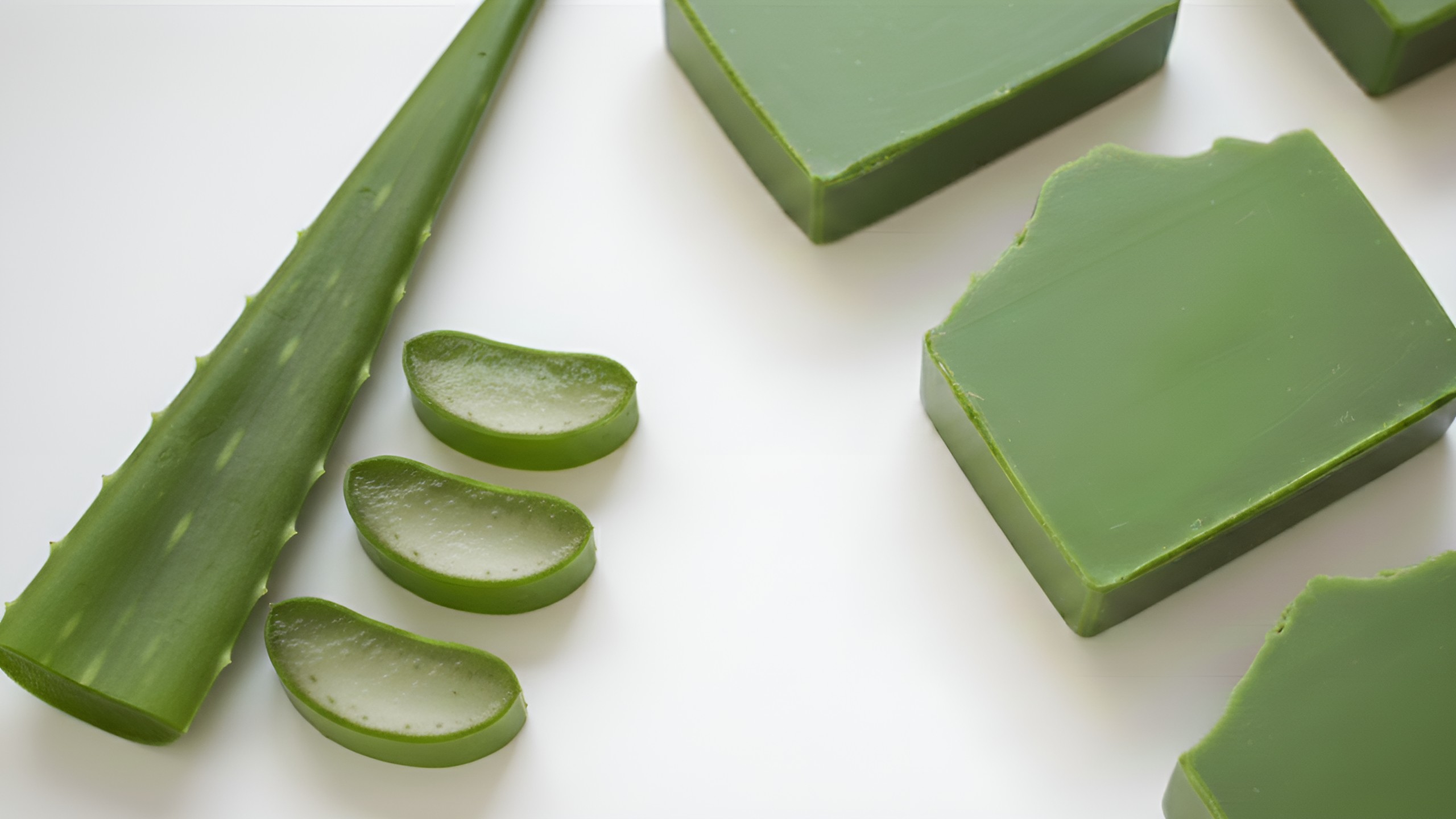
Among natural formulations, Cold-Process Aloe Vera Soap stands out as a premier cosmetic solution. Formulated with fresh botanical gels, nutrient-dense plant butters, and specialized oils, this soothing bar gently cleanses the skin without inducing tightness, itchiness, or inflammation.
This comprehensive guide outlines the active ingredient chemistry, exact formulation percentages, required equipment, and a precise step-by-step manufacturing protocol to craft a high-performing Aloe Vera facial and body bar.
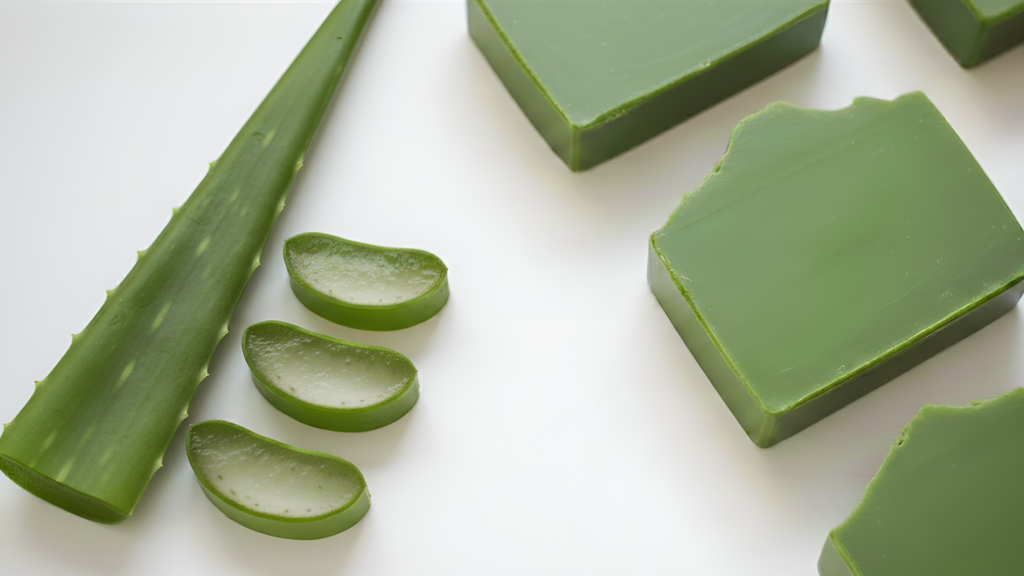
Technical Formulation & Batch Calculations
To maintain strict quality control and batch consistency, all ingredients must be measured precisely by weight (in grams) rather than volume.
Raw Ingredient Profile & Functional Benefits
- Fresh Aloe Vera Gel (217g): Serves as the liquid component of the lye phase. Aloe Vera calms sensitive and reactive skin, delivers deep non-comedogenic hydration, soothes sun-exposed tissue, and accelerates cellular repair.
- Sweet Almond Oil (550g): Rich in antioxidant Vitamin E and essential fatty acids, this light lipid hydrates dry skin, improves elasticity, and yields an exceptionally gentle soap bar ideal for sensitive skin types.
- Coconut Oil (340g): Provides strong cleansing properties and creates a rich, fluffy, and abundant lather. It also possesses natural antimicrobial properties.
- Castor Oil (30g): Acts as a lather booster and stabilizer, giving the soap foam a dense, creamy, velvet-like texture.
- Shea Butter (30g): Restores skin elasticity, reduces localized inflammation and itching, and repairs damaged or cracked skin barriers.
- Cocoa Butter (50g): Provides long-lasting occlusive moisture, reinforces the cutaneous barrier, gives the bar physical hardness, and imparts a silky post-wash feel.
- Sodium Hydroxide / Lye (144g): The essential alkaline agent required to convert triglycerides into natural soap molecules and glycerin.
Equipment & Personal Protective Equipment (PPE)
Prior to handling raw chemical compounds like Sodium Hydroxide, ensure your workspace is fully sanitized, properly ventilated, and equipped with mandatory PPE:
- Personal Protection: Safety goggles, nitrile gloves, a filtration mask, long sleeves, and hair covering.
- Laboratory Hardware: A digital scale (0.1g accuracy), an immersion stick blender, an infrared thermometer gun, heat-resistant glass beakers, a deep mixing container, silicone spatulas, silicone soap molds, and ice cube trays.
Step-by-Step Cold-Process Manufacturing Protocol
Step 1: Aloe Vera Gel Extraction & Freezing
- Wash fresh Aloe vera leaves thoroughly.
- Stand the leaves upright vertically in a container for 15–20 minutes to drain the yellow latex (aloin). Crucial: Aloin must be completely removed as it causes localized severe skin irritation and burning sensations.
- Rinse the leaves once more, strip the outer green rind, and extract the clear inner fillet gel.
- Puree the gel using an immersion blender until completely smooth. Pour the puree into ice cube trays and place in the freezer until completely solid.
Step 2: Preparing the Aloe-Lye Solution
- Weigh out 217g of frozen Aloe Vera ice cubes into a heat-resistant beaker.
- Slowly sprinkle 144g of Sodium Hydroxide (NaOH) crystals directly over the frozen aloe cubes.
- Stir slowly and continuously with a spatula. The exothermic heat generated by the lye will gradually melt the frozen aloe puree without scorching the delicate vitamins or turning the liquid dark brown. Set aside to cool.
Step 3: Lipid Phase Preparation
- In a heat-safe beaker, combine Shea Butter (30g), Cocoa Butter (50g), Coconut Oil (340g), Castor Oil (30g), and Sweet Almond Oil (550g).
- Note: Reserve 2 tablespoons of Sweet Almond Oil in a small container for pigment dispersion.
- Gently heat the remaining oils and solid butters over a warm water bath (double boiler) until completely liquid.
- Mix the reserved 2 tablespoons of oil with the Titanium Dioxide and Green Mica powder until completely smooth and clump-free.
Step 4: Saponification & Emulsification (Achieving Trace)
- Measure the temperature of both the oil mixture and the lye solution using your infrared thermometer. Both phases should reach a matching temperature (or within a narrow range of each other).
- Pour the lye-aloe solution slowly into the warm oil phase inside the deep mixing container.
- Submerge the immersion blender and pulse on low speed until a light “trace” is formed—the point where oils and lye fully emulsify into a homogenous batter.
- Add the pre-dispersed green and white pigments into the soap batter and pulse briefly to distribute the color evenly.
Step 5: Fragrance Addition & Molding
- Monitor the soap batter temperature; ensure it cools down to 35°C–38°C (95°F–100°F) before adding fragrance. Adding fragrance oils at elevated temperatures can cause flash evaporation or batter acceleration (seizing).
- Pour in 30g of fragrance or essential oil and blend rapidly with a spatula or short pulses of the stick blender.
- Lightly spray your silicone mold with isopropyl alcohol. Pour the fluid soap batter into the mold, tap gently on the counter to release air bubbles, and cover lightly.
- Place the mold in a warm, dry area for 24 hours to undergo complete saponification.
Unmolding, Cutting, and Curing
- Unmolding: After 24 hours, carefully remove the solid soap block from the silicone mold.
- Cutting: Slice the block into individual bar sizes using a sharp cutter.
- Curing Period: Place the bars on drying racks in a cool, dark, and well-ventilated room for 4 to 6 weeks.
Why Curing is Mandatory: The 4 to 6-week curing window allows excess water content to evaporate, hardening the soap bar for a longer lifespan in the shower while ensuring the saponification reaction finishes completely, resulting in an exceptionally gentle, non-irritating product.
Summary Formulation Matrix
| Ingredient | Weight (g) / Unit | Primary Cosmetic Function |
| Sweet Almond Oil | 550g | Vitamin E barrier protection & skin elasticity |
| Coconut Oil | 340g | Deep cleansing action & dense foam production |
| Fresh Aloe Puree | 217g | Soothing anti-inflammatory moisture base |
| Sodium Hydroxide | 144g | Alkaline saponification catalyst |
| Cocoa Butter | 50g | Deep occlusive moisture & bar hardness |
| Shea Butter | 30g | Skin repair & soothing anti-itch properties |
| Castor Oil | 30g | Foam stabilization & velvety skin-feel |
| Fragrance Oil | 30g | Aromatic customer appeal |
| Mica / Colorants | 1/8 tsp each | Cosmetic aesthetic appeal |
🎥 Source Reference
Formulation protocol adapted from Dr Dewi on YouTube: