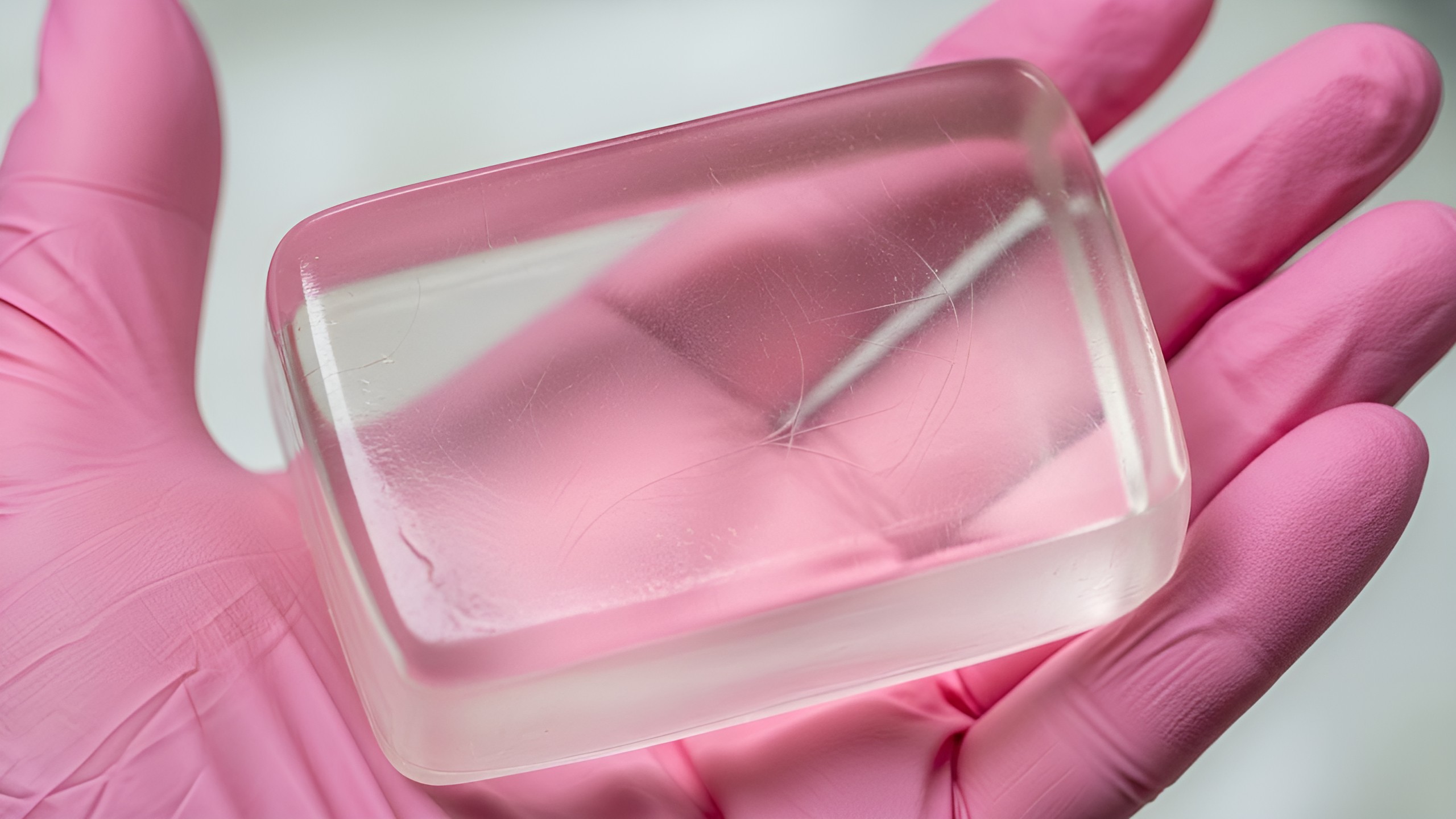
DIY High-Clarity Transparent Melt and Pour Soap Base
The commercial and artisanal demand for high-clarity Melt and Pour Soap Base has seen explosive growth in the cosmetics industry. Renowned for its gentle cleansing action, intense moisture retention, and exceptional versatility, a transparent Melt and Pour Soap Base forms the ideal foundation for building an independent bath and body brand.
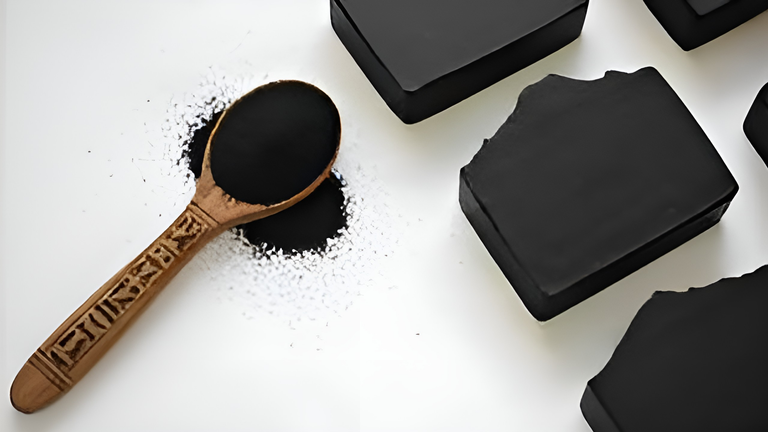
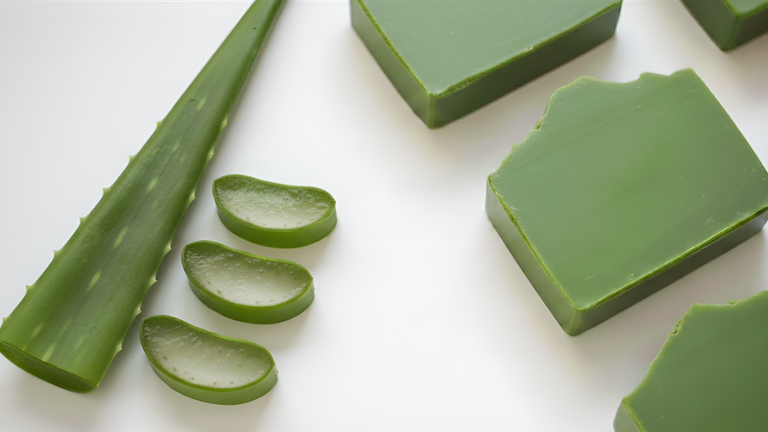
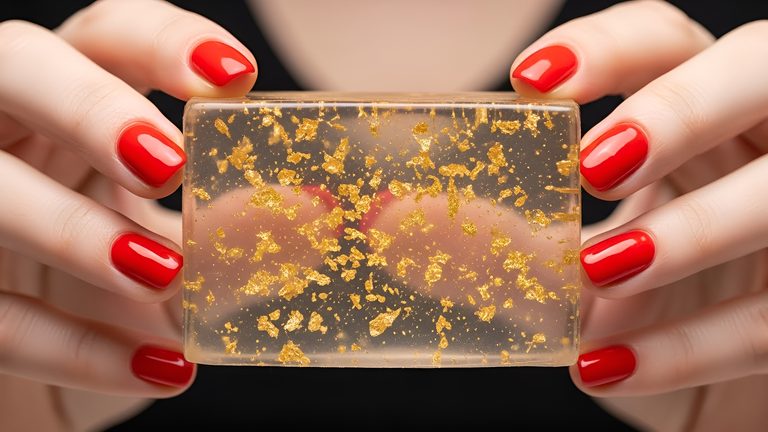
Unlike conventional commercial detergent bars that frequently strip skin lipids and induce cutaneous dryness, a properly formulated Melt and Pour Soap Base actively hydrates and strengthens the skin barrier. Furthermore, its high transparency allows cosmetic formulators to craft visually stunning creations, such as embedded botanical soaps, charcoal detox bars, and luxury 24K gold foil bars.
In this comprehensive, step-by-step masterclass, we will explore the chemical principles of transparency in saponification, detailed ingredient functionalities, strict safety protocols, a master 1000g batch formula, and the complete manufacturing procedure required to formulate professional-grade Melt and Pour Soap Base from scratch.
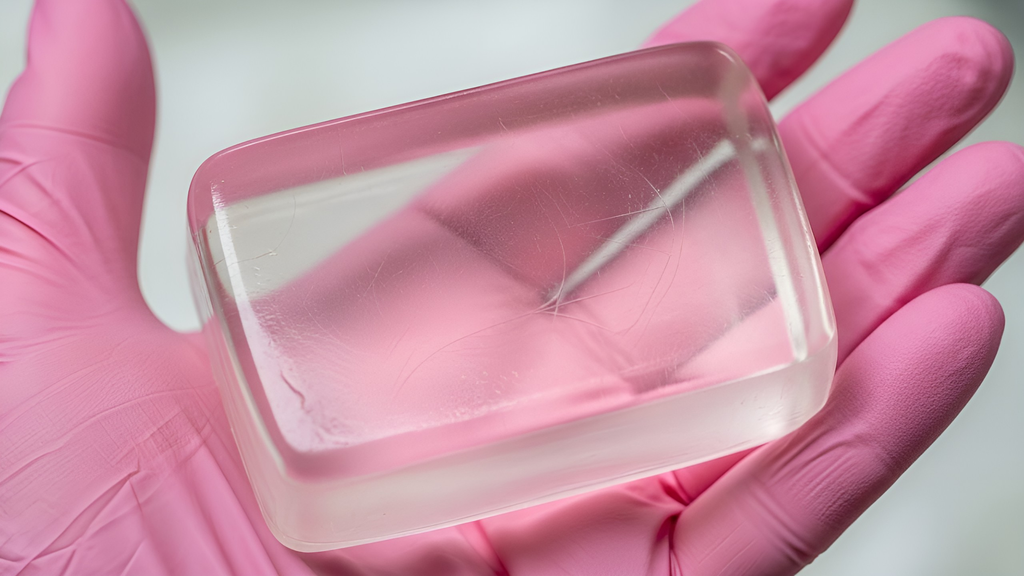
The Science of Transparency in Soap Saponification
To create a crystal-clear Melt and Pour Soap Base, formulators must understand the chemical dynamics involved in the saponification process.
Saponification occurs when triglycerides (fatty acids in natural oils) react with an alkali agent—specifically Sodium Hydroxide (NaOH / Caustic Soda)—to produce soap salts (fatty acid carboxylates) and natural glycerin.
In standard cold-process or hot-process soap making, fatty acid salts form opaque crystalline structures that scatter light, giving the bar a solid, non-transparent appearance. To achieve high clarity and re-meltability in a Melt and Pour Soap Base, formulators introduce solvents and clarity enhancers (such as Glycerin, Propylene Glycol, Sorbitol, or Sugar Syrups). These ingredients prevent the soap molecules from crystallizing, keeping them in a transparent gel phase even after cooling and solidification, allowing the base to be remelted and molded easily later.
Detailed Ingredient Breakdown & Functional Science
Every component in this high-clarity formula plays a specific role in balancing base hardness, lather density, skin mildness, meltability, and visual transparency.
1. Stearic Acid (Hardness & Creamy Lather)
Stearic acid is a saturated long-chain fatty acid that provides structural hardness and longevity to the Melt and Pour Soap Base. It reacts with sodium hydroxide to form sodium stearate, which produces a dense, stable, and velvety foam while reducing moisture loss from the skin barrier during washing.
2. Coconut Oil (Cocos Nucifera) (Cleansing & Bubbles)
Coconut oil serves as the primary source of lauric and myristic fatty acids. It gives the Melt and Pour Soap Base powerful cleansing ability, natural antibacterial activity, and large, rapid bubble volume.
3. Castor Oil (Ricinus Communis) (Lather Booster & Clarity)
Rich in ricinoleic acid, Castor oil boosts lather stability and longevity. Because ricinoleic acid is highly soluble in alcohol and glycol solvents, Castor oil aids significantly in maintaining overall transparency in the Melt and Pour Soap Base.
4. Vegetable Glycerin (Humectant Hydration)
Glycerin acts as a powerful humectant, drawing moisture from the surrounding environment into the top layers of the skin. It leaves the skin feeling soft and supple rather than dry or tight.
5. Monopropylene Glycol (MPG) (Solvent, Meltability & Crack Prevention)
Propylene glycol works alongside glycerin as a co-solvent and humectant. It ensures complete dissolution of soap crystals, enhances ingredient blending, enables smooth remelting, and prevents the final Melt and Pour Soap Base from cracking or drying out over time.
6. Distilled Water & Sodium Hydroxide (NaOH) (Saponification Agent)
Distilled water acts as the vehicle to dissolve Sodium Hydroxide pellets. Using pure distilled water is mandatory; tap water contains mineral ions (like calcium and magnesium) that create soap scum and ruin transparency.
7. Sorbitol or Sugar-Water Solution (Clarity Enhancers)
Sorbitol (or a 50/50 sucrose-distilled water syrup) increases light transmission through the soap matrix, enhancing clarity while adding extra humectant properties.
8. Cocamidopropyl Betaine (CAPB) (Mild Surfactant & Foam Booster)
Derived from coconut oil, CAPB is an amphoteric surfactant that softens the cleansing action, boosts foam stability, and ensures the Melt and Pour Soap Base remains mild enough for sensitive skin types and children.
9. Triethanolamine (TEA) (pH Adjuster & Stabilizer)
Triethanolamine acts as an emulsifier and pH neutralizer, smoothing the finished base texture, reducing harshness, and stabilizing clarity.
Equipment, Workspace & Critical Safety Protocols
Working with Sodium Hydroxide (caustic soda) requires strict adherence to safety rules to prevent chemical burns and inhalation of fumes.
Safety Gear Checklist (Mandatory):
- Chemical-Resistant Nitrile Gloves: Protects hands against caustic spills.
- Safety Goggles & Face Mask: Protects eyes and lungs from alkali dust and fumes during mixing.
- Long-Sleeved Shirt, Full-Length Pants & Closed-Toe Shoes: Ensures full skin protection against accidental splashes.
- Hair Cover / Hairnet: Maintains product hygiene.
Lab Tools & Equipment Checklist:
- Precision Digital Kitchen Scale: Accurate to 0.1g.
- Stainless Steel Pot: Must be high-grade stainless steel (never use aluminum, as alkali reacts dangerously with aluminum).
- Heat-Resistant Glass Beakers (Pyrex): For dissolving the caustic soda solution.
- Heat-Safe Silicone Spatula: For gentle, continuous stirring.
- Silicone Storage / Block Molds: Flexible molds for pouring and setting the base blocks.
- Spray Bottle with 70% Isopropyl Alcohol: For eliminating surface bubbles.
- Plastic Cling Film or Shrink Wrap: For wrapping finished Melt and Pour Soap Base blocks immediately.
Master Formula & Percentage Breakdown (1000g Batch)
The table below outlines the precise formula required to produce 1 kg (1000g) of professional, high-clarity Melt and Pour Soap Base:
| Phase | Ingredient Name | Function / Purpose | Weight (%) | 1000g Batch |
| Phase A | Stearic Acid | Hardness, Structure & Creamy Foam | 12.5% | 125.0 g |
| Phase A | Coconut Oil | Cleansing Power & Flash Foam | 18.75% | 187.5 g |
| Phase A | Castor Oil | Lather Conditioning & Clarity Support | 6.25% | 62.5 g |
| Phase A | Vegetable Glycerin | Humectant Hydration | 6.25% | 62.5 g |
| Phase A | Monopropylene Glycol (MPG) | Solvent, Meltability & Anti-Cracking | 33.75% | 337.5 g |
| Phase B | Distilled Water | Alkali Solvent | 11.85% | 118.5 g |
| Phase B | Sodium Hydroxide (NaOH) | Caustic Saponification Agent | 6.0% | 60.0 g |
| Phase C | Sorbitol (or 125g Sugar + 125g Water) | Clarity Enhancer & Humectant | 25.0% | 250.0 g |
| Phase C | Cocamidopropyl Betaine (CAPB) | Mild Surfactant & Foam Booster | 6.25% | 62.5 g |
| Phase D | Triethanolamine (TEA) | Neutralizer, pH Adjuster & Clarifier | 3.75% | 37.5 g |
| Total | 100.0% | 1000.0 g |
Step-by-Step Manufacturing Process
Follow this operational workflow to manufacture crystal-clear Melt and Pour Soap Base safely.
Step 1: Sanitation & Safety Setup
Put on your full protective gear: gloves, safety goggles, mask, long sleeves, closed shoes, and hairnet. Clean and sanitize all stainless steel pots, beakers, spatulas, and silicone molds with 70% Isopropyl Alcohol.
Step 2: Melting Phase A Oils, Waxes & Solvents
- Place your stainless steel pot on the digital scale.
- Weigh out 125.0g Stearic Acid, 187.5g Coconut Oil, 62.5g Castor Oil, 62.5g Vegetable Glycerin, and 337.5g Monopropylene Glycol (MPG).
- Place the pot on very low heat on your stovetop or hot plate.
- Stir gently until all the stearic acid flakes and solid fats have melted into a fully uniform, clear liquid. Remove briefly from heat to prevent overheating.
Step 3: Mixing Phase B Lye Solution (Crucial Safety Step)
- In a heat-resistant Pyrex glass beaker, weigh out 118.5g of Distilled Water.
- In a separate small container, weigh out 60.0g of Sodium Hydroxide (NaOH) pellets.
- Safety Warning: Slowly add the dry NaOH pellets into the distilled water while stirring gently. NEVER pour water onto dry NaOH, as this can cause an exothermic reaction, boiling, and splashing.
- Stir until the solution becomes completely clear. The mixture will heat up rapidly due to the exothermic reaction. Allow it to rest until it cools slightly.
Step 4: Saponification Process
- Gently pour the warm Lye Solution (Phase B) into the stainless steel pot containing your melted Phase A oils and solvents.
- You will notice immediate cloudiness or thick white traces forming as saponification begins. Do not panic—this is normal.
- Return the pot to low heat and stir continuously and gently. As heat is applied, the cloudy mixture will gradually cook out and dissolve into a smooth, liquid gel phase.
Step 5: Incorporating Phase C (Sorbitol & CAPB)
- In a separate beaker, mix 250.0g Sorbitol (or your prepared 125g sugar + 125g water solution) with 62.5g Cocamidopropyl Betaine (CAPB).
- Remove the soap pot from the heat and pour in the Phase C mixture.
- Stir vigorously and thoroughly until all components blend smoothly.
Step 6: Final Clarity Adjustment with Phase D (TEA)
- Add 37.5g of Triethanolamine (TEA) to the warm soap mixture.
- Stir gently for 1 to 2 minutes. The addition of TEA helps clarify the soap solution, leaving you with a crystal-clear, liquid Melt and Pour Soap Base.
Step 7: Molding, Surface De-Bubbling & Shrink-Wrapping
- Lightly spray the insides of your silicone molds with 70% Isopropyl Alcohol.
- Slowly pour the hot liquid Melt and Pour Soap Base into the mold cavities or block container.
- Immediately spray the top surface of the freshly poured liquid base with 70% Isopropyl Alcohol. The alcohol breaks surface tension, instantly popping any micro-bubbles to ensure a smooth, transparent top surface.
- Leave the molds undisturbed at room temperature for several hours until completely hard and cool.
- Once fully solidified, gently flex the silicone mold to release the Melt and Pour Soap Base blocks.
- Immediate Packaging: Immediately wrap each base block tightly in plastic cling film or shrink wrap.
The Science of “Soap Sweating” & Prevention Techniques
A common challenge encountered when formulating a Melt and Pour Soap Base is “soap sweating”—the accumulation of small water droplets on the base’s surface when left out in open air.
Why Does Melt and Pour Soap Base Sweat?
Glycerin, Propylene Glycol, and Sorbitol are all highly effective humectants. They attract water molecules directly from the air. In humid conditions, the base pulls ambient atmospheric moisture onto its surface, resulting in bead-like droplets that give the soap block a “sweaty” appearance.
Key Prevention Steps:
- Immediate Airtight Wrapping: Wrap each Melt and Pour Soap Base block in cling wrap or heat-shrink plastic as soon as it is unmolded to prevent contact with ambient humidity.
- Humidity-Controlled Workspace: Formulate, cool, and package your soap bases in an air-conditioned room with low humidity.
- Avoid Overheating: Over-boiling the liquid soap during cooking causes water evaporation, upsetting the solvent ratio and making the final base more prone to sweating.
Product Labeling, INCI & Regulatory Guidelines
To market your custom Melt and Pour Soap Base legally, product packaging should include clear, compliant labeling:
Label Requirements:
- Product Name: (e.g., Ultra-Clear Transparent Melt and Pour Soap Base)
- Net Weight: Stated in grams (g) or ounces (oz).
- INCI Ingredients List: Listed in descending order of weight:Ingredients: Propylene Glycol, Sorbitol, Cocos Nucifera (Coconut) Oil, Stearic Acid, Water (Aqua), Sodium Hydroxide, Glycerin, Castor Oil (Ricinus Communis), Cocamidopropyl Betaine, Triethanolamine.
- Directions for Use: Chop into small cubes, melt in a microwave or double boiler, add desired fragrances or colorants, pour into molds, and allow to set.
- Precautions: For external use only. Avoid contact with eyes. Discontinue use if irritation occurs.
- Manufacturer Info: Business name, contact details, batch/lot number, and expiration date.
Frequently Asked Questions (FAQs)
Q1: Can I add essential oils, colors, or botanical extracts when remelting this base?
Answer: Yes! Once the Melt and Pour Soap Base is made and remelted, you can add up to 0.5%–1.0% essential oils, water-soluble dyes, or oil-soluble extracts (such as Licorice or Gold Leaf). Keep total additives under 1.5% to avoid clouding the soap’s transparency.
Q2: What can I use if Sorbitol is unavailable in my region?
Answer: You can substitute Sorbitol with a simple sugar syrup made by dissolving 125g of white granulated sugar in 125g of hot distilled water. Ensure all sugar crystals are completely dissolved before adding to the soap pot.
Q3: How long does this Melt and Pour Soap Base last?
Answer: Properly formulated, wrapped, and stored in a cool, dry place away from direct sunlight, this base maintains its remeltability, clarity, lather, and moisture for 12 to 24 months.
Conclusion & Next Steps for Your Business
Mastering the formulation of High-Clarity Transparent Melt and Pour Soap Base gives you complete creative control over your product line. By understanding how fatty acids, alkalis, and solvents interact, you can produce a crystal-clear, skin-friendly soap base that serves as a solid foundation for your beauty brand.
Start with small 1000g test batches, perfect your clarity technique, wrap your finished base blocks promptly, and expand your line into specialized luxury handcrafted soaps!
🎥 Source Video Reference
This masterclass guide is adapted from the cosmetics formulation series by Dr Dewi on YouTube: