Ultra-Nourishing Body Soufflé dIY: The Ultimate Winter Body Butter for Deep Hydration
During the cold autumn and winter months, the human integumentary system faces severe environmental stresses. Low relative humidity outdoors, combined with artificial heating indoors, accelerates Transepidermal Water Loss (TEWL). When humidity drops, the stratum corneum—the outermost layer of the epidermis—loses its hydration balance. This causes severe xerosis, flaking, microscopic fissuring, and compromised lipid barrier function. High-friction areas such as knees, elbows, heels, and hands suffer most, experiencing chronic discomfort and inflammation.
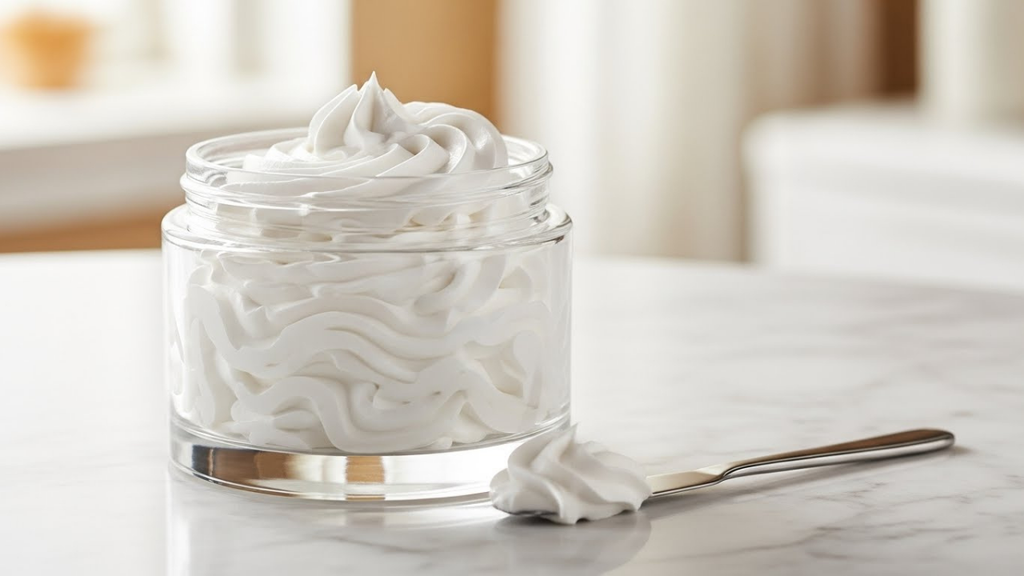
1. Introduction & The Evolution of Anhydrous Skincare
While conventional emulsion lotions offer immediate surface hydration, they are primarily water-based (often containing 70% to 90% water). In harsh dry climates, the water content in conventional lotions evaporates rapidly if not locked in with sufficient occlusive agents, sometimes leaving dry skin feeling tighter than before application.
To combat severe skin dryness without synthetic petrochemicals, modern cosmetic formulators look to Anhydrous Skincare Formulations—specifically whipped Body Butters and Body Soufflés. Formulated purely from nutrient-rich botanical fats, plant-derived oils, natural waxes, and active antioxidants, an anhydrous body soufflé creates a long-lasting, protective lipid mantle across the epidermis. This barrier traps existing moisture, softens keratinized surface tissues, and delivers essential fatty acids deep into the upper skin layers.
This comprehensive formulator’s guide details the legendary “Somaliza” Body Soufflé Recipe. Honoring the memory of cosmetic formulator Somaliza, this guide covers the underlying lipophilic chemistry, master formulation percentages, ingredient bio-profiles, precise equipment setups, step-by-step manufacturing protocols, troubleshooting procedures, and commercial batch scaling calculations.
2. In-Depth Cosmetic Chemistry & Active Ingredient Profiles
Understanding the molecular profile of plant lipids is vital for professional cosmetic formulators. The synergy between solid vegetable fats and liquid lipids dictates the rheology, melting point, spreadability, and shelf-life stability of a whipped body soufflé.
A. Avocado Butter (Persea Gratissima Butter)
- Master Batch Weight: 28.35g
- Lipid Profile: Rich in Oleic Acid (C18:1), Palmitic Acid (C16:0), and Linoleic Acid (C18:2).
- Biological Mechanism: Derived from hydrogenated avocado fruit oil, avocado butter is a rich, creamy, semi-soft lipid. It contains high levels of unsaponifiables, including phytosterols, vitamins A, D, and E. When applied topically, phytosterols mimic the skin’s natural intercellular lipids, soothing irritated skin, restoring suppleness, and stimulating cellular renewal. It serves as the primary velvety base for this formulation.
B. Cocoa Butter (Theobroma Cacao Seed Butter)
- Master Batch Weight: 28.35g
- Lipid Profile: Concentrated in Stearic Acid (C18:0), Oleic Acid (C18:1), and Palmitic Acid (C16:0).
- Biological Mechanism: Cocoa butter is a hard, brittle vegetable fat extracted from cocoa beans, melting near body temperature (~34°C–38°C). Its high concentration of saturated fatty acids provides high thermal resistance and structural integrity to the soufflé, preventing the product from slumping in warm ambient temperatures. Additionally, cocoa butter is rich in natural polyphenols, which fight free radicals and shield cutaneous tissues from oxidative stress.
C. Avocado Oil (Persea Gratissima Fruit Oil)
- Master Batch Weight: 18.77g
- Lipid Profile: Monounsaturated Fatty Acids, Lecithin, Potassium, and Vitamin E.
- Biological Mechanism: As a cold-pressed, liquid carrier oil, avocado oil softens the rigid crystalline structure of cocoa butter. Its low molecular density allows it to penetrate the upper layers of the stratum corneum easily, transporting lipophilic nutrients deep into the skin while enhancing the product’s overall spreadability.
D. Tapioca Starch / Cornstarch (Manihot Esculenta / Zea Mays)
- Master Batch Weight: 1.0 tsp (~2.5g–3.0g)
- Functional Mechanism: Native starches act as natural oil-modifiers and sensory enhancers. Raw botanical oils can leave a greasy residue on the skin. Tapioca starch granules absorb surface lipids, cutting down initial shine and leaving a silky, powdery finish on the skin.
E. Fragrance / Essential Oil Phase
- Master Batch Weight: 2.0 mL
- Functional Mechanism: Provides aromatic appeal, enhancing the overall user experience. High-quality cosmetic fragrance oils or pure essential oils (such as Lavender, Vanilla, or Sweet Orange) promote relaxation while masking the raw, earthy scent of unrefined cocoa and avocado fats.
3. Laboratory Setup, Sanitation Protocols & PPE Standard Operating Procedures
In commercial and artisanal cosmetic production, maintaining strict hygienic protocols is non-negotiable. Because anhydrous formulations do not contain water, they are naturally resistant to microbial proliferation (such as bacteria, mold, and yeast). However, if water droplets or unsterilized utensils contaminate the batch during manufacturing, microbial colonies can thrive.
Sanitization Standard Operating Procedure (SOP):
- Workstation Disinfection: Clean all laboratory benchtops using a 70% Isopropyl Alcohol (IPA) solution. Allow surfaces to air dry for at least 3 minutes to achieve complete pathogen destruction.
- Personal Protective Equipment (PPE): Formulators must wear clean lab coats, powder-free nitrile gloves, a hair containment net, and a protective mask to prevent accidental hair or respiratory droplet contamination.
- Utensil Sterilization: Wash all glass beakers, stainless steel whisks, electric mixer beaters, and silicone spatulas with hot soapy water. Rinse thoroughly with distilled water, wipe down with 70% IPA, and allow to air dry completely. Never allow tap water residue to remain on equipment.
4. Step-by-Step Manufacturing Protocol & Crystal Rheology
Polymorphism in natural plant fats—specifically cocoa butter—requires precise temperature control during manufacturing. If plant lipids are heated too quickly or cooled improperly, the fat crystals solidify into unstable forms, causing gritty, grainy textures over time. Following a controlled thermal profile ensures a stable, cloud-like consistency.
Step 1: Gentle Thermal Melting Phase
- Zero your digital scale with a heat-resistant glass beaker.
- Accurately weigh out 28.35g Cocoa Butter, 227.0g Avocado Butter, and 18.77g Avocado Oil.
- Set up a Bain-Marie (double boiler) system filled with gently simmering water. Place the beaker into the warm water bath.
- Stir gently with a glass rod or silicone spatula. Heat only until the solid fats are liquefied (approx. 50°C–55°C). Avoid excessive heat to preserve sensitive phytosterols and vitamins.
Step 2: Controlled Rapid Cooling Phase
- Transfer the melted liquid lipids into a deep, sanitized glass mixing bowl.
- Cover the bowl with clean foil or plastic wrap to shield it from airborne dust.
- Place the bowl into a refrigerator (4°C) for approximately 60 minutes.
- Formulation Critical Point: Monitor the cooling process closely. The liquid lipids must solidify into an opaque, soft-butter consistency (similar to soft margarine). If the mixture is whipped while still warm, it will fail to incorporate air. Conversely, if it hardens completely like a brick, it will strain mixer blades and fail to aerate evenly.
Step 3: Primary Aeration Phase (The Mechanical Whip)
- Remove the semi-solid lipid mixture from refrigeration.
- Using an electric hand mixer fitted with stainless steel beaters, begin whipping on low speed to break up the firm lipid mass.
- Increase speed to medium-high for 5 to 8 minutes.
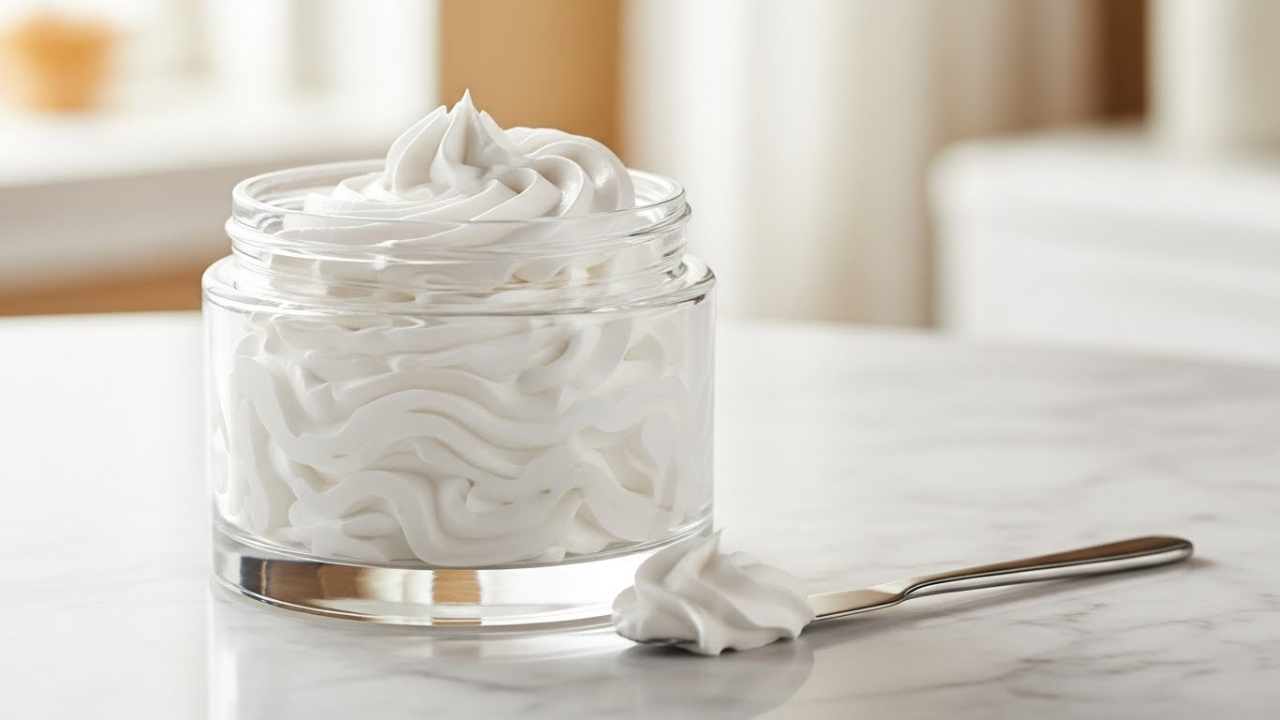
- Observe the physical transition: As micro-bubbles of air become trapped within the crystallizing fat matrix, the dense yellow liquid turns into a bright, off-white, whipped-cream texture that increases significantly in volume.
Step 4: Aromatic Integration Phase
- Using a calibrated glass pipette or dropper, measure 2.0 mL of your chosen cosmetic fragrance or pure essential oil.
- Drizzle the oil evenly over the whipped lipid mass.
- Whip on medium speed for an additional 2 minutes until the fragrance is completely homogenized throughout the batch.
Step 5: Starch Modification & Final Aeration
- Measure 1.0 teaspoon of Tapioca Starch (or Cornstarch) using a clean measuring spoon.
- Sift the starch over the whipped soufflé to prevent clumping.
- Whip the soufflé on high speed for a final 2 to 3 minutes. The starch absorbs surface oils, while the final whip locks in stiff, airy peaks that hold their structure.
Step 6: Hygienic Packaging & Labeling
- Scoop the finished Body Soufflé into wide-mouth, UV-protective amber glass jars or opaque PET plastic containers using a sanitized silicone spatula or piping bag.
- Avoid over-compacting the butter into the jar to protect its airy, whipped texture.
- Fasten the lids securely, wipe down container exteriors with 70% IPA, and attach custom brand labels detailing batch numbers, manufacture dates, and usage warnings.
5. Troubleshooting Common Formulating Defects
Even experienced cosmetic formulators encounter physical stability issues when crafting natural body butter. Below is a comprehensive troubleshooting matrix to diagnose and fix common formulation defects:
Deep-Dive Analysis of Formulation Defects:
- Preventing Graininess (Stearic Acid Crystallization): Graininess occurs when hard fats with high melting points (like Cocoa or Shea butter) cool too slowly. The saturated stearic acid molecules cluster together, forming hard, sand-like grains within soft liquid oils. The solution is rapid flash-cooling. Placing the melted lipids directly into a cold environment forces all fatty acid chains to solidify simultaneously, resulting in a smooth texture.
- Managing Thermal Melting Points: Anhydrous body soufflés melt upon skin contact (~37°C). However, if ambient room temperatures exceed 30°C during summer, the soufflé may lose its trapped air bubbles and revert to a dense liquid oil. To adapt this formula for hot climates, increase the Cocoa Butter proportion (or add 1% to 2% natural Beeswax/Candelilla Wax) to raise the thermal melt point.
- Preventing Lipid Oxidation (Rancidity): Because this formulation is 100% water-free, synthetic chemical preservatives (like parabens or phenoxyethanol) are not required. However, botanical oils rich in unsaturated fatty acids can oxidize over time when exposed to oxygen and light. Adding 0.5% Tocopherol (Vitamin E Oil) acts as a potent antioxidant, extending product shelf-life to 12–18 months by slowing lipid peroxidation.
7. Quality Control, Stability Testing & Packaging Standards
- Centrifuge Stability Test: Subject a 10g sample to 3,000 RPM for 30 minutes at room temperature. The batch must show no oil phase separation or air-pocket deflation.
- Freeze-Thaw Cycling: Cycle finished samples between -10°C (freezer) for 24 hours and 25°C (room temp) for 24 hours over three consecutive cycles. The texture must remain uniform without developing graininess or oil pooling.
- Packaging Selection: Anhydrous products must be protected from ambient moisture and light. Opaque, wide-mouth PET plastic containers or UV-blocking amber glass jars with PE sealing liners are ideal. The PE sealing liner prevents water vapor from entering the container during warm showers.
8. Consumer Usage Guidelines & Application Techniques
To maximize skin barrier hydration, educate end consumers on proper application techniques:
- Apply to Micro-Damp Skin: Advise users to apply the Body Soufflé immediately following a warm bath or shower while the skin is still micro-damp. The plant oils lock in surface water droplets, sealing hydration deep inside the stratum corneum.
- Target High-Friction Zones: Massage a small amount using circular motions onto rough, thick keratinized zones such as heels, elbows, knees, and dry cuticles.
- Storage Instructions: Store the container in a cool, dry place away from direct sunlight and heat sources. Keep water out of the jar by using clean, dry hands or a cosmetic spatula to scoop out the butter.
9. Comprehensive Formulator FAQ Section
Q1: Can I replace Tapioca Starch with other starches?
Yes. You can substitute Tapioca Starch with Arrowroot Powder, Cornstarch, or Rice Starch at a 1:1 ratio. Arrowroot powder provides an exceptionally light, silky skin-feel without altering product color.
Q2: How do I make this formula 100% vegan?
This specific formula is already 100% vegan. It relies exclusively on plant-derived lipids (Avocado Butter, Cocoa Butter, Avocado Oil) and botanical starches. No animal waxes (like Beeswax) or animal-derived lipids (like Lanolin) are present.
Q3: Do I need to include a preservative in this Body Soufflé?
No, provided no water enters the product during production or use. Broad-spectrum antimicrobial preservatives are required only in formulations containing water. However, adding an antioxidant like Vitamin E (Tocopherol) at 0.5% is strongly recommended to prevent oil rancidity.
Q4: My body butter melted during shipping in warm weather. How can I fix it?
If the product melts in transit, place the jar in the refrigerator for 30–45 minutes until solid. While it will lose its whipped, airy texture and become a dense balm, its moisturizing properties will remain completely intact.
🎥 Source & Dedication Reference
Formulation protocol adapted from Dr Dewi on YouTube