
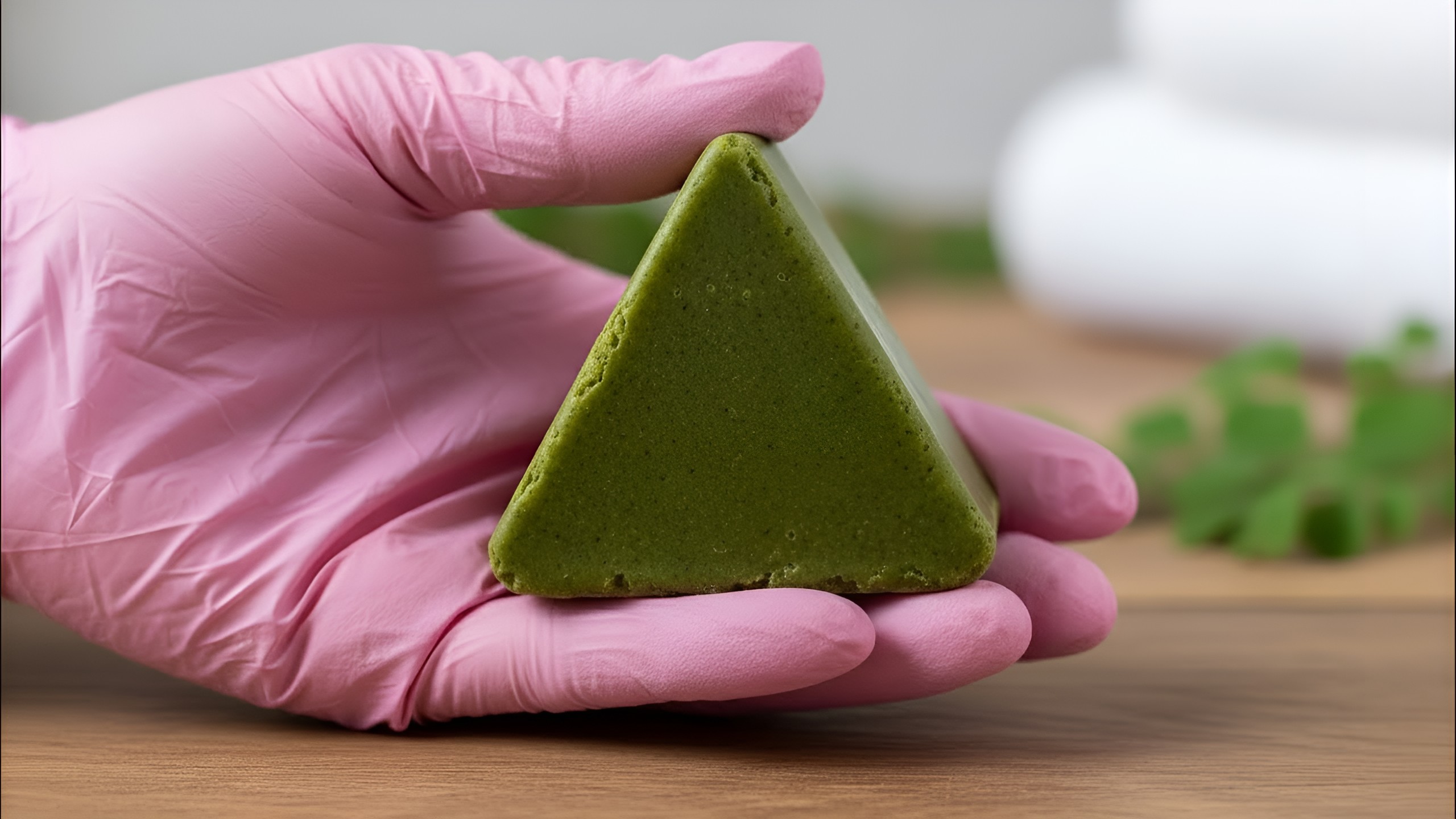
the Original Chinese Seven Green Herbal Shampoo Bar for Hair Density and Growth recipe
In recent years, solid cosmetic formulations—commonly referred to as shampoo bars—have taken the global hair care industry by storm. Driven by consumer demand for eco-friendly, zero-waste packaging, high active ingredient concentration, and travel-friendly solutions, solid shampoo bars have evolved far beyond traditional cold-process soaps.
Unlike alkaline soap bars, which carry a high pH that can disrupt the scalp’s protective mantle and lead to hair shaft damage, modern surfactant-based shampoo bars are pH-balanced, gentle, and highly effective. Among these trending innovations, the famous Chinese Seven Green Herbal Shampoo Bar (often recognized by its vibrant green color and herbal profile) has gained massive viral popularity. Celebrated for its ability to deep-cleanse the scalp, combat hair thinning, stimulate dormant follicles, and address persistent dandruff, this solid shampoo bar combines ancient botanical wisdom with modern surfactant technology.
This comprehensive guide breaks down the complete formulation science, raw material breakdown, equipment requirements, safety practices, and step-by-step manufacturing process to help cosmetic formulators and skincare entrepreneurs craft an authentic, high-performance Seven Green Herbal Shampoo Bar.
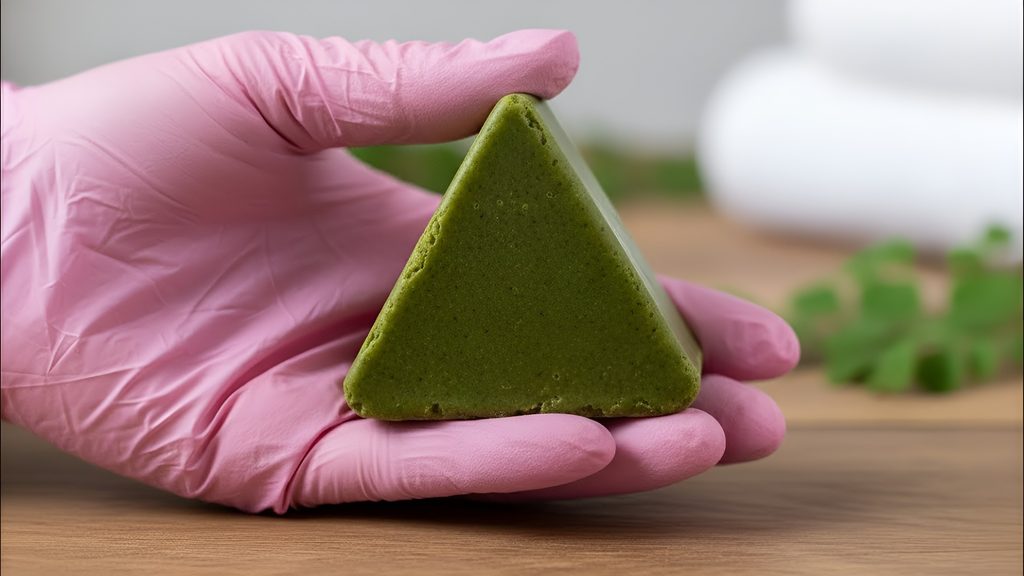
Key Ingredients and Botanical Science
The exceptional performance of this Chinese herbal shampoo bar lies in its synergy between gentle primary surfactants, rich botanical powders, natural clays, stabilizing butter, and essential oils.
1. Primary Surfactants: SCI and CAPB
- Sodium Cocoyl Isethionate (SCI): Known as “Baby Foam,” SCI is a mild, biodegradable, coconut-derived anionic surfactant. It creates a rich, creamy, and luxurious lather while thoroughly removing dirt, excess sebum, and product buildup without stripping the hair’s natural lipids.
- Cocamidopropyl Betaine (CAPB): A gentle amphoteric liquid co-surfactant derived from coconut oil. CAPB works synergistically with SCI to soften the cleansing action, boost foam stability, reduce static, and lower the overall irritation potential of the formulation.
2. The Seven Green Botanical Powerhouses
- Sidr Powder (Ziziphus jujuba / Christ’s Thorn Jujuba): Rich in natural plant saponins, Sidr provides gentle cleansing while coating the hair shaft to increase strand diameter, volume, and natural shine. It soothes irritated scalps and calms mild dandruff.
- Rosemary Powder (Rosmarinus officinalis): Renowned in trichology for boosting microcirculation in the scalp. Enhanced blood flow delivers vital nutrients and oxygen to hair follicles, strengthening roots and reducing premature hair shedding.
- Spirulina Powder: A nutrient-dense blue-green microalgae rich in proteins, amino acids, vitamins, and antioxidants. It accelerates cellular turnover, revitalizes tired follicles, and provides the bar with its rich signature green hue.
- Amla Powder (Phyllanthus emblica / Indian Gooseberry): Packed with Vitamin C and potent polyphenols, Amla combats oxidative stress, delays premature graying, fortifies the hair shaft against breakage, and promotes robust growth.
- Moringa Powder (Moringa oleifera): Known as the “Miracle Tree,” Moringa delivers essential fatty acids and vitamins A, B, C, and E. It creates a protective biological shield around hair strands against urban pollution and environmental damage.
- Olive Leaf Powder (Olea europaea): Rich in oleuropein, an antioxidant that safeguards scalp cells against free radical damage, supports moisture retention, and maintains scalp elasticity.
- Aloe Vera Powder: A concentrated botanical humectant that calms scalp inflammation, relieves itching, hydrates dry strands, and smoothens the hair cuticle.
3. Scalp Purifying and Conditioning Agents
- Bentonite Clay: A natural mineral clay that acts as a magnetic detoxifier, absorbing heavy metals, toxins, excess oils, and impactions from hair follicles, allowing the scalp to breathe.
- Jojoba Oil: A liquid wax ester that closely mimics human sebum. It nourishes hair follicles without clogging pores or weighing down fine hair strands.
- Raw Shea Butter & Stearic Acid: Shea butter provides deep lipid replenishment and protection against dryness, while Stearic Acid acts as a hardener and structural builder, ensuring the shampoo bar remains firm and durable during use.
- Tea Tree Essential Oil: A clinically proven antimicrobial, antifungal, and antiseptic essential oil that eliminates Malassezia fungi—the primary culprit behind scalp dandruff and persistent itchiness.
Equipment, Hygiene, and Safety Guidelines
Manufacturing solid anhydrous and semi-solid cosmetics requires strict adherence to hygiene protocols to maintain product safety and batch consistency.
Required Laboratory Equipment
- Digital Scale (precision accuracy to 0.01g)
- Heat-Resistant Glass Beakers or Stainless Steel Bowls
- Double Boiler Setup or Water Bath (or Microwave)
- Fine Mesh Sieve / Strainer
- Stainless Steel Mixing Spatulas and Bowls
- Flexible Silicone Molds (Triangle, Oval, or Round shapes)
- Protective Gear: Particle Face Mask (N95/FFP2 recommended when handling SCI powder), Rubber Gloves, and Hair Net
- 70% Isopropyl Alcohol for sanitization
Sanitation Standard Operating Procedure (SOP)
- Clean all counter surfaces thoroughly with an antibacterial agent.
- Spray all utensils, silicone molds, and glass beakers with 70% Isopropyl Alcohol and let them air-dry completely.
- Wear a particle face mask continuously while weighing and sieving dry surfactant powders (SCI) to prevent inhalation of airborne dust particles.
Master Formula & Percentage Breakdown
This master formula is designed on a weight-by-weight percentage basis (w/w%) totaling 100%. The batch sizes can easily be scaled up or down according to production needs. Below is the recipe for a 100g standard batch.
| Ingredient Name | Phase | Function / Category | Percentage (%) | Weight for 100g Batch (g) |
| Sodium Cocoyl Isethionate (SCI) | Phase A | Primary Solid Surfactant | 65.0% | 65.0g |
| Sidr Powder | Phase A | Botanical Active | 1.0% | 1.0g |
| Rosemary Powder | Phase A | Botanical Active | 1.0% | 1.0g |
| Spirulina Powder | Phase A | Botanical Active & Colorant | 1.0% | 1.0g |
| Amla Powder | Phase A | Botanical Active | 1.0% | 1.0g |
| Moringa Powder | Phase A | Botanical Active | 1.0% | 1.0g |
| Olive Leaf Powder | Phase A | Botanical Active | 1.0% | 1.0g |
| Aloe Vera Powder | Phase A | Soothing Active | 0.5% | 0.5g |
| Bentonite Clay | Phase A | Detoxifying Mineral | 1.0% | 1.0g |
| Stearic Acid | Phase B | Hardening Agent | 3.0% | 3.0g |
| Raw Shea Butter | Phase B | Lipid Conditioning | 5.0% | 5.0g |
| Jojoba Oil | Phase B | Nourishing Carrier Oil | 4.0% | 4.0g |
| Cocamidopropyl Betaine (CAPB) | Phase B | Liquid Co-Surfactant | 15.0% | 15.0g |
| Tea Tree Essential Oil | Phase C | Antimicrobial / Fragrance | 0.5% | 0.5g |
| Broad-Spectrum Preservative | Phase C | Anti-microbial protection | 1.0% | 1.0g |
| Total | 100.0% | 100.0g |
Step-by-Step Manufacturing Procedure
Follow this precise formulation procedure to ensure uniform distribution of botanical powders and avoid structural crumbling of your finished solid bars.
Step 1: Dry Phase Preparation (Phase A)
- Put on your protective face mask, gloves, and hair net.
- In a large, dry stainless steel mixing bowl, place a fine mesh sieve.
- Measure out the 65.0g of SCI, along with all dry herbal powders (Sidr 1.0g, Rosemary 1.0g, Spirulina 1.0g, Amla 1.0g, Moringa 1.0g, Olive Leaf 1.0g, Aloe Vera 0.5g) and 1.0g of Bentonite Clay.
- Sift all dry powders through the mesh sieve into the bowl to remove any hard lumps or coarse granules.
- Blend the dry ingredients thoroughly with a dry spatula until a uniform, pale green dry powder mix is achieved.
Step 2: Heated Oil Phase Preparation (Phase B)
- In a heat-resistant glass beaker, weigh 3.0g of Stearic Acid, 5.0g of Raw Shea Butter, 4.0g of Jojoba Oil, and 15.0g of Cocamidopropyl Betaine (CAPB).
- Place the beaker in a water bath (double boiler) set to low-medium heat.
- Stir gently until the stearic acid and shea butter are completely melted and dissolved into the liquid surfactant and oil phase. Remove from heat immediately once liquid.
Step 3: Combining and Dough Kneading
- Slowly pour the warm liquid Phase B mixture over the sifted Phase A dry powder mixture in your mixing bowl.
- Using a sturdy spatula or clean gloved hands, combine the wet and dry ingredients. Work the mixture continuously, rubbing and pressing the powders into the liquids.
- As the dry surfactants absorb the liquid oils and co-surfactants, the mixture will transition from a crumbly texture into a smooth, cohesive, dough-like mass.
Step 4: Cooling and Heat-Sensitive Additives (Phase C)
- Allow the dough temperature to cool down below 40°C (104°F).
- Add 0.5g of Tea Tree Essential Oil and 1.0g of Broad-Spectrum Preservative into the dough.
- Knead the dough vigorously for an additional 2 to 3 minutes to ensure even distribution of the essential oil and preservative throughout the batch.
Step 5: Molding and Compacting
- Divide the dough into equal portions corresponding to your mold capacity (e.g., 80g–100g bars).
- Press the dough firmly into sanitized silicone molds (traditionally triangular or round shapes). Press down hard with your fingers or a flat mold press to pack the mixture tightly and eliminate internal air pockets.
- Alternatively, if molds are unavailable, hand-roll and shape the dough firmly into solid circular cakes.
Step 6: Hardening and Curing
- Allow the filled silicone molds to rest undisturbed at room temperature for 24 hours until the bars harden completely. (Optional: Place molds in the refrigerator for 30–60 minutes to speed up initial solidifying).
- Gently unmold the hardened solid shampoo bars.
- Place the unmolded bars on a drying rack in a well-ventilated, low-humidity area for another 24 hours to complete the air-drying process.
How to Package, Store, and Use the Bar
Packaging and Storage
- Packaging: Wrap each fully dried shampoo bar in breathable greaseproof paper, glassine paper, or house them in aluminum travel tins. Avoid non-recyclable plastic wraps that trap moisture.
- Storage: Store packaged bars in a cool, dry place away from direct sunlight and humidity. Kept properly, these bars have a shelf life of 12 to 18 months.
How to Use for Maximum Hair Growth Benefits
- Wetting: Thoroughly wet your scalp and hair with lukewarm water.
- Application: Either rub the shampoo bar directly onto wet hair in gentle downward strokes or rub the bar between wet hands to build a rich, creamy lather.
- Scalp Massage: Massage the lather into the scalp using fingertips (not fingernails) for 2 to 3 minutes. This gentle stimulation boosts blood circulation and allows the botanical actives to nourish the hair follicles.
- Rinsing: Rinse hair thoroughly with running water until all soap residue is completely removed.
- Post-Use Care: Place the shampoo bar on a well-draining soap dish after use. Keeping the bar dry between washes extends its life significantly.
Common Troubleshooting & Formulation Tips
1. The Shampoo Bar Is Crumbling or Falling Apart
- Cause: Insufficient liquid binder or inadequate pressing force during molding.
- Solution: Increase the Cocamidopropyl Betaine (CAPB) liquid surfactant slightly by 1–2% or add a small amount of vegetable glycerin. Ensure firm, maximum pressure is applied when packing dough into silicone molds.
2. The Shampoo Bar Is Too Soft or Sticky
- Cause: Excess liquid or soft butter proportion.
- Solution: Increase the Stearic Acid percentage by 1–2% to enhance hardness, or reduce the carrier oil level slightly. Ensure the bar is given full 48 hours to air-dry before use.
3. Preservative Necessity
- Question: Does an anhydrous solid bar need a preservative?
- Answer: Yes! While the bar itself contains no added water during manufacturing, it resides in wet shower environments and comes into direct contact with water during daily use. Adding a 1% broad-spectrum preservative prevents microbial contamination and mold growth on the bar surface over time.
Frequently Asked Questions (FAQ)
What makes this shampoo bar different from traditional soap bars?
Traditional soap bars are produced via saponification of oils using lye (Sodium Hydroxide), resulting in a high pH level (pH 8.5–10). This high alkalinity causes hair cuticles to swell, leading to frizz, dullness, and tangling. In contrast, this herbal shampoo bar uses mild, plant-based surfactants formulated at a skin-friendly pH range (pH 5.5–6.5), keeping hair cuticles smooth and healthy.
How long does one 100g shampoo bar last?
One 100g solid shampoo bar is highly concentrated and equivalent to approximately 2 to 3 bottles (250ml each) of traditional liquid shampoo, lasting between 50 to 70 washes depending on hair length and storage conditions.
Can this herbal bar be used on color-treated or chemically straightened hair?
Yes. Because it uses sulfate-free, mild surfactants like SCI and CAPB, it cleanses without stripping hair dye, keratin treatments, or natural protective oils.
Does the bar help with severe hair loss?
This herbal formulation contains potent microcirculation boosters (Rosemary, Amla, Spirulina, and Sidr) that optimize the scalp environment, clear follicular blockages, and strengthen roots to minimize shedding. For medical hair loss conditions (such as androgenetic alopecia), it serves as a complementary natural care product alongside professional dermatological treatments.
Conclusion
Formulating the authentic Chinese Seven Green Herbal Shampoo Bar bridges the gap between traditional herbal medicine and modern green cosmetic chemistry. By combining gentle coconut-derived surfactants with potent botanical powders and scalp-purifying clays, formulators can offer a high-value, sustainable, and highly effective product that transforms routine hair care into a restorative scalp treatment.