
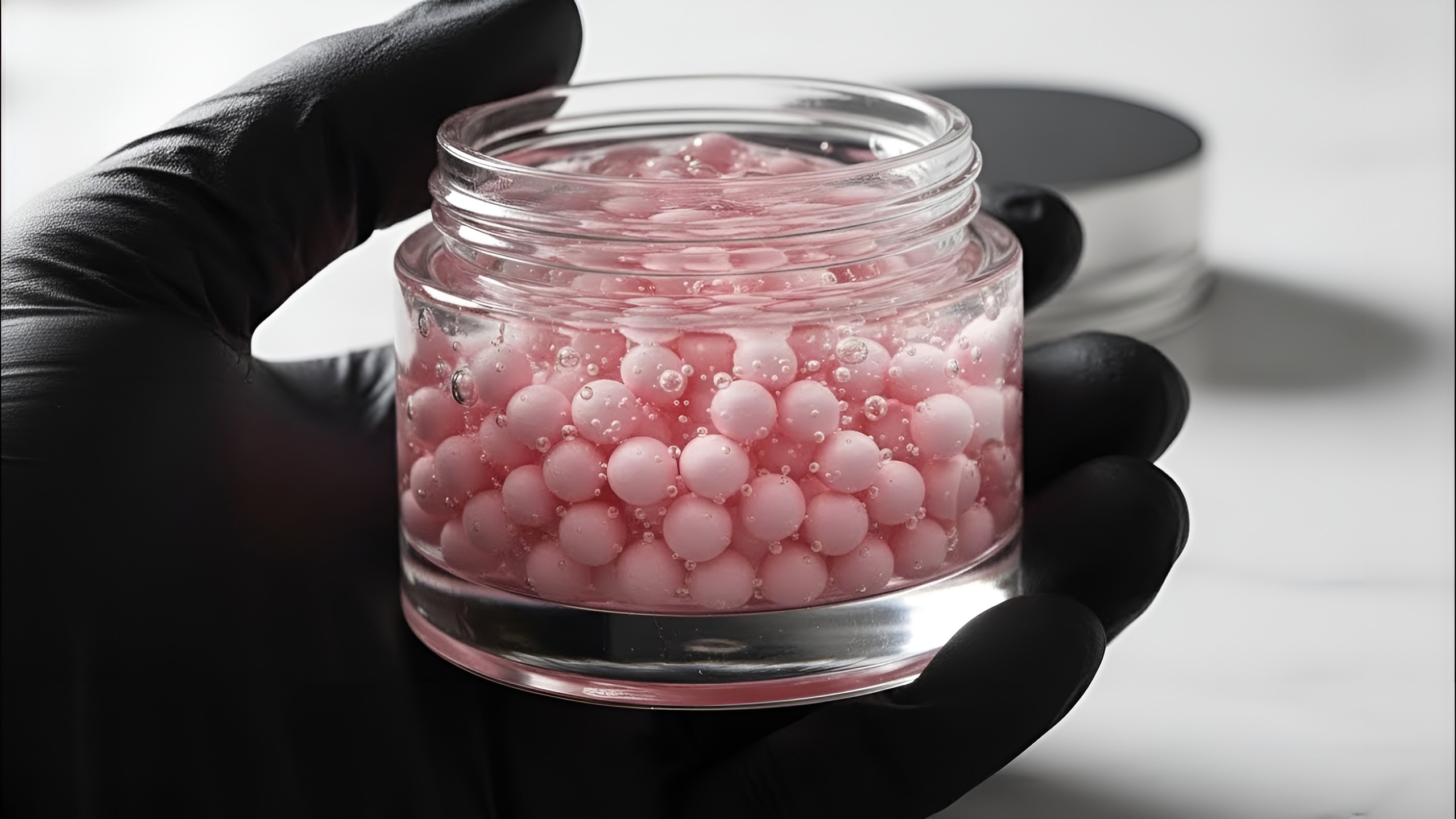
Korean-Style Glass Skin Boba Cream Step-by-Step DIY
The global skincare landscape has experienced a dramatic transformation, driven largely by the immense popularity of K-Beauty (Korean Beauty). Among the most celebrated trends originating from this movement is the concept of “Glass Skin”—a complexion so flawless, deeply hydrated, smooth, and luminous that it reflects light like a polished sheet of glass. Leading skincare brands have popularized innovative, texturally engaging formulations such as “Boba Cream” (often inspired by high-end products like Medicube’s capsule creams). These products suspend rich, active-filled cream spheres inside a clear, soothing gel matrix, offering both visual appeal and target-driven efficacy.
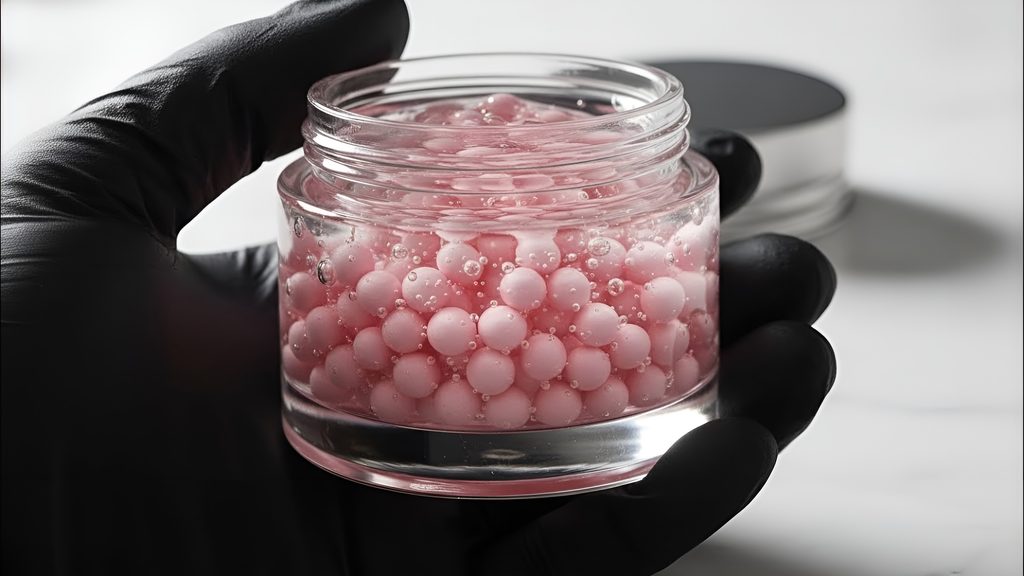
Creating a commercial-grade Boba Cream at home or for a boutique skincare line requires an understanding of cosmetic chemistry, phase stability, ingredient compatibility, and precise manufacturing techniques. This comprehensive guide breaks down the formulation science, key active ingredients, hygiene protocols, exact percentage formulations, and step-by-step manufacturing instructions for creating a high-performance Korean-Style Alpha-Arbutin and Hyaluronic Acid Glass Skin Boba Cream.
1. The Science of Glass Skin & Boba Cream Technology
Achieving glass skin requires addressing multiple skin concerns simultaneously: intense moisture retention, skin-barrier restoration, hyperpigmentation reduction, sebum regulation, and texture refinement. A standard single-phase cream often struggles to deliver immediate surface hydration while providing dense, lipid-replenishing nourishment without feeling heavy.
Boba Cream technology solves this through a dual-phase suspension architecture:
- The Gel Phase (The Continuous Matrix): A lightweight, high-molecular-weight hyaluronic acid hydrogel that saturates the stratum corneum with hydration upon application, forming an instant water-locking barrier.
- The Boba Cream Phase (The Dispersed Phase): Concentrated, lipid-rich cream spheres infused with powerful skin-brightening actives like Niacinamide, Alpha-Arbutin, and natural Botanical Extracts.
When applied to the skin, the user mixes a portion of the gel with one or two cream spheres. This creates a fresh, customized emulsion directly on the skin surface, delivering active ingredients while imparting a radiant, dewy, non-greasy glow.
2. Key Active Ingredients & Their Scientific Benefits
Every ingredient chosen in this formulation plays a precise role in improving skin tone, texture, and resilience.
A. Niacinamide (Vitamin B3)
Niacinamide is a powerhouse active in modern dermatology. It inhibits the transfer of melanosomes from melanocytes to keratinocytes, effectively fading dark spots, post-acne marks (post-inflammatory hyperpigmentation), and melasma. Furthermore, Niacinamide stimulates ceramide synthesis to strengthen the skin barrier, regulates sebum production, tightens enlarged pores, and calms cutaneous redness.
B. Alpha-Arbutin
Alpha-Arbutin is a stable, biosynthesized ingredient derived from hydroquinone glucoside. It acts as a competitive inhibitor of tyrosinase, the key enzyme responsible for melanin production in the skin. Unlike traditional hydroquinone, Alpha-Arbutin delivers potent brightening effects without cytotoxicity or severe skin irritation, making it suitable for sensitive skin types seeking hyperpigmentation control.
C. High Molecular Weight Hyaluronic Acid
Hyaluronic Acid (HA) is a natural glycosaminoglycan capable of holding up to 1,000 times its weight in water. Using high molecular weight HA allows the formation of a breathable, non-occlusive film on the skin’s surface. This film prevents Trans-Epidermal Water Loss (TEWL), smooths fine dehydration lines, and gives the gel phase its characteristic cooling, plush texture.
D. Glycerin
Glycerin acts as a classic humectant, pulling moisture from the ambient atmosphere into the lower epidermal layers. It supports epidermal lipid membrane fluidity, enhances barrier recovery, and improves the overall spreadability of the final product.
E. Hibiscus Glycerite Extract
Hibiscus extract, often referred to as the “plant botox,” is rich in natural alpha-hydroxy acids (AHAs), anthocyanins, and antioxidants. It gently encourages cell turnover, defends against oxidative damage caused by free radicals, and supports collagen integrity. Glycerite extraction ensures that the soothing and hydrating qualities of the botanical are preserved alongside its bio-actives.
F. Grape Seed Oil (Vitis Vinifera)
Grape Seed Oil is a lightweight, non-comedogenic botanical oil rich in linoleic acid (Omega-6), Vitamin E, and proanthocyanidins. It rapidly penetrates the skin without clogging pores, offering deep lipid nourishment, enhancing elasticity, and combating environmental oxidative stress.
G. D-Panthenol (Pro-Vitamin B5) & Vitamin E (Tocopherol)
Pro-Vitamin B5 penetrates deep into the skin layers to promote cellular repair, relieve itching, reduce inflammation, and accelerate wound healing. Tocopherol (Vitamin E) serves as a lipid-soluble antioxidant that prevents oil oxidation in the cream phase while offering cellular protection against free-radical damage.
H. Rosehip Essential Oil
Rosehip oil is celebrated for its natural trans-retinoic acid and essential fatty acid content. It promotes skin regeneration, refines texture, and boosts radiant luminosity.
3. Required Tools, Equipment & Hygiene Protocols
Cosmetic formulations containing water phases are susceptible to microbial contamination (bacteria, yeast, and mold). Adhering to strict Good Manufacturing Practices (GMP) is critical to ensuring product safety, stability, and shelf-life.
Required Equipment:
- Precision Digital Scale: Accurate to 0.01g for measuring small percentage active ingredients and preservatives.
- Heat-Resistant Glass Beakers: At least 3–4 clean, dry borosilicate glass beakers.
- Immersion Blender / High-Shear Homogenizer: For emulsifying the oil and water phases into a stable cream.
- Water Bath (Double Boiler setup): To melt waxes and heat phases evenly.
- Silicone Spatulas: Heat-resistant and easily sanitized.
- Pastry Piping Bag (or Sterile Dosing Syringe): Essential for shaping the cream into precise “Boba” spheres inside the jar.
- pH Meter or Digital pH Indicator Strips: To measure and calibrate final pH levels.
- Storage Jars: Clear cosmetic jars (preferably acrylic or glass).
Sanitation Protocol:
- Thoroughly wash all equipment with warm water and detergent.
- Rinse everything with distilled water.
- Sanitize all surfaces, spatulas, beakers, and jars with 70% Isopropyl Alcohol, allowing them to air dry completely.
- Wear protective gear including disposable nitrile gloves, a face mask, and a hairnet throughout the entire formulation process.
4. Complete Master Formula Breakdown
Below is the master formulation percentage batch sheet for creating 100g of the Glass Skin Boba Cream system.
Total System Breakdown (100% Total):
Phase A (Water & Active Phase for Cream Base):
- Distilled Water: 42.65%
- Niacinamide: 3.00%
- Alpha-Arbutin: 1.00%
- Glycerin: 2.50%
- Broad-Spectrum Preservative (Water-soluble phase portion): 0.25%
Phase B (Oil & Emulsifier Phase for Cream Base):
- Emulsifying Wax NF (or Cetearyl Alcohol + Polysorbate 60): 3.00%
- Cetyl Alcohol (Co-emulsifier & thickener): 2.00%
- Grape Seed Oil: 10.00%
Phase C (Water Phase for Heating):
- Distilled Water: 29.60%
Phase D (Cool-Down & Active Additives for Cream Base):
- D-Panthenol (Pro-Vitamin B5): 0.50%
- Vitamin E (Tocopherol): 0.50%
- Hibiscus Glycerite Extract: 4.00%
- Rosehip Essential Oil: 0.50%
- Broad-Spectrum Preservative (Cool-down phase portion): 0.25%
Phase E (Hyaluronic Acid Gel Matrix):
- High Molecular Weight Hyaluronic Acid Powder: 0.50% (Note: The Hyaluronic Acid is hydrated over the initial active water phase containing Niacinamide and Alpha-Arbutin to form the clear outer gel).
5. Step-by-Step Manufacturing Procedure
Step 1: Preparation of the Active Water & Gel Phase
- In a sterile glass beaker, tare your digital scale and add 42.65g of Distilled Water.
- Slowly add 3.00g of Niacinamide and stir thoroughly with a glass rod or spatula until completely dissolved and clear.
- Add 1.00g of Alpha-Arbutin to the mixture, stirring until fully dissolved.
- Stir in 2.50g of Glycerin and 0.25g of your water-compatible broad-spectrum preservative. Mix well after adding each component.
- Gently sprinkle 0.50g of High Molecular Weight Hyaluronic Acid powder across the surface of the liquid. Do not stir aggressively immediately. Cover the beaker with clean foil or a watch glass and allow it to sit undisturbed for 30–60 minutes. The HA powder will naturally swell and hydrate, forming a crystal-clear, viscous gel.
Step 2: Preparation of the Cool-Down Active Phase
- In a small, separate sterile beaker, prepare your heat-sensitive active ingredients.
- Add 0.50g of D-Panthenol and mix well until dissolved. Cover and set aside.
Step 3: Preparation of Oil Phase & Water Phase Heating
- In Beaker A, combine the oil phase components: 3.00g Emulsifying Wax, 2.00g Cetyl Alcohol, and 10.00g Grape Seed Oil.
- In Beaker B, measure out 29.60g of Distilled Water.
- Place both Beaker A and Beaker B into a warm water bath (double boiler) set to approximately 70°C–75°C (158°F–167°F). Allow the waxes and lipids in Beaker A to melt completely while Beaker B reaches an equivalent temperature.
Step 4: Emulsification (Creating the Cream Base)
- Once both phases reach 70°C–75°C, remove them carefully from the water bath.
- Slowly pour the heated distilled water (Beaker B) into the melted oil phase (Beaker A) while continuously blending with a high-shear immersion blender.
- Blend on low to medium speed for 2–3 minutes until a uniform, smooth, glossy white emulsion forms.
- Switch to manual stirring with a spatula as the cream cools. Cover the beaker lightly to prevent moisture evaporation, stirring periodically every few minutes to ensure the emulsion remains stable and does not separate during cooling.
Step 5: Incorporating Cool-Down Actives
- Monitor the temperature of the newly formed cream base using an infrared or digital thermometer.
- Once the cream cools below 40°C (104°F), add 0.50g of Vitamin E, 4.00g of Hibiscus Glycerite Extract, 0.50g of Rosehip Essential Oil, the remaining 0.25g of Broad-Spectrum Preservative, and the pre-dissolved D-Panthenol solution.
- Blend thoroughly using your spatula or a brief low-speed pulse of the blender until all active ingredients and botanical extracts are fully integrated into the smooth cream. The Hibiscus extract will give the cream a delicate tint.
6. pH Testing, Calibration & Stability Standards
Maintaining an optimal pH is vital for both skin health and ingredient efficacy.
Why pH Matters for This Formulation:
- Niacinamide: Requires a stable pH between 5.0 and 6.0. If the pH drops below 4.5, Niacinamide can hydrolyze into Niacin, which causes severe skin flushing and irritation.
- Alpha-Arbutin: Most stable and effective within a pH range of 4.5 to 6.5.
- Skin Acid Mantle: Healthy skin maintains a natural pH of roughly 4.7 to 5.5.
How to Measure and Adjust pH:
- Take a small 10% dilution sample of your cream phase mixed with distilled water (or measure directly if using a calibrated glass-electrode digital pH meter).
- Measure the pH of both your Hyaluronic Acid Gel phase and your Cream phase.
- Target pH Range: 5.0 to 5.5.
- If pH is too high (above 5.5): Add a drop-by-drop solution of 10% Citric Acid dissolved in distilled water, mixing well and re-testing until target pH is reached.
- If pH is too low (below 5.0): Add a drop-by-drop solution of 10% L-Arginine or Sodium Hydroxide solution, mixing thoroughly until balanced.
7. Packaging & The “Boba Sphere” Assembly Technique
The visual signature of Boba Cream lies in its suspended dual-phase architecture. Achieving this pattern requires careful layering during packaging.
Assembly Procedure:
- Prepare the Piping Bag: Sanitize a pastry piping bag fitted with a small, round opening tip (or use a sterile dosing syringe). Transfer your finished cool-down cream phase into the bag.
- First Layer (Gel Base): Spoon a small amount (approx. 15-20%) of the clear Hyaluronic Acid Gel into the bottom of your sanitized cosmetic jar.
- Forming the Cream Boba Spheres: Insert the piping bag tip into the gel layer. Pipe small, round, spherical pearls (boba shapes) of the cream directly into the gel matrix.
- Layering: Spoon another thin layer of clear gel over the piped spheres. Pipe another round of cream spheres on top.
- Final Touch: Repeat this alternating process until the jar is filled, ensuring clear gel surrounds the outer perimeter so the suspended cream boba spheres remain visible through the jar walls.
- Sealing: Cap tightly, label with production date, batch number, and full INCI ingredient list.
8. Usage Instructions, Storage & Shelf-Life Guidelines
How to Use:
- Cleanse the face thoroughly and apply any lightweight toner.
- Using the included cosmetic spatula, scoop out a portion of the product containing both the clear gel matrix and one or two cream boba pearls.
- Mix the gel and cream pearls together in the palm of your hand or apply directly to the cheeks, forehead, and neck.
- Gently massage in upward circular motions until fully absorbed into the skin.
- Follow with sun protection during daytime use.
Storage & Shelf Life:
- Storage: Store in a cool, dry place away from direct sunlight, excess humidity, and direct heat sources. Keep the container tightly closed when not in use.
- Shelf Life: When formulated under strict sanitary conditions with an effective broad-spectrum preservative system (at 0.5% total usage level) and maintained within a pH range of 5.0–5.5, this product typically boasts a shelf life of 6 to 12 months.
9. Frequently Asked Questions (FAQ)
Q1: Can I substitute Grape Seed Oil with another botanical oil?
Yes. If you prefer a different texture, you can replace Grape Seed Oil with other light, non-comedogenic oils such as Jojoba Oil, Squalan, or Rosehip Seed Oil. Maintain the same oil phase percentage (10.00%) to ensure emulsion stability.
Q2: Why did my Hyaluronic Acid gel become cloudy or clumpy?
Clumping occurs when Hyaluronic Acid powder is stirred too quickly before it has time to hydrate naturally. To avoid clumps, sprinkle the powder evenly over the water phase and allow it to sit covered for 30–60 minutes without agitation.
Q3: Is this Boba Cream formulation suitable for acne-prone skin?
Yes. The formulation uses light, non-comedogenic oils (Grape Seed Oil) alongside Niacinamide, which helps regulate sebum production and calm inflammatory breakouts. However, as with any cosmetic product, a patch test on the inner forearm for 24 hours prior to full facial application is recommended.
Q4: How do I prevent the cream spheres from blending into the gel over time?
To maintain distinct boba spheres inside the gel, ensure that the viscosity of both phases is balanced. The Hyaluronic Acid gel must be sufficiently thick (0.5% high molecular weight HA), and the cream phase must be fully set and cooled before piping. If the cream is too warm or liquid when piped, the phases may merge over time.