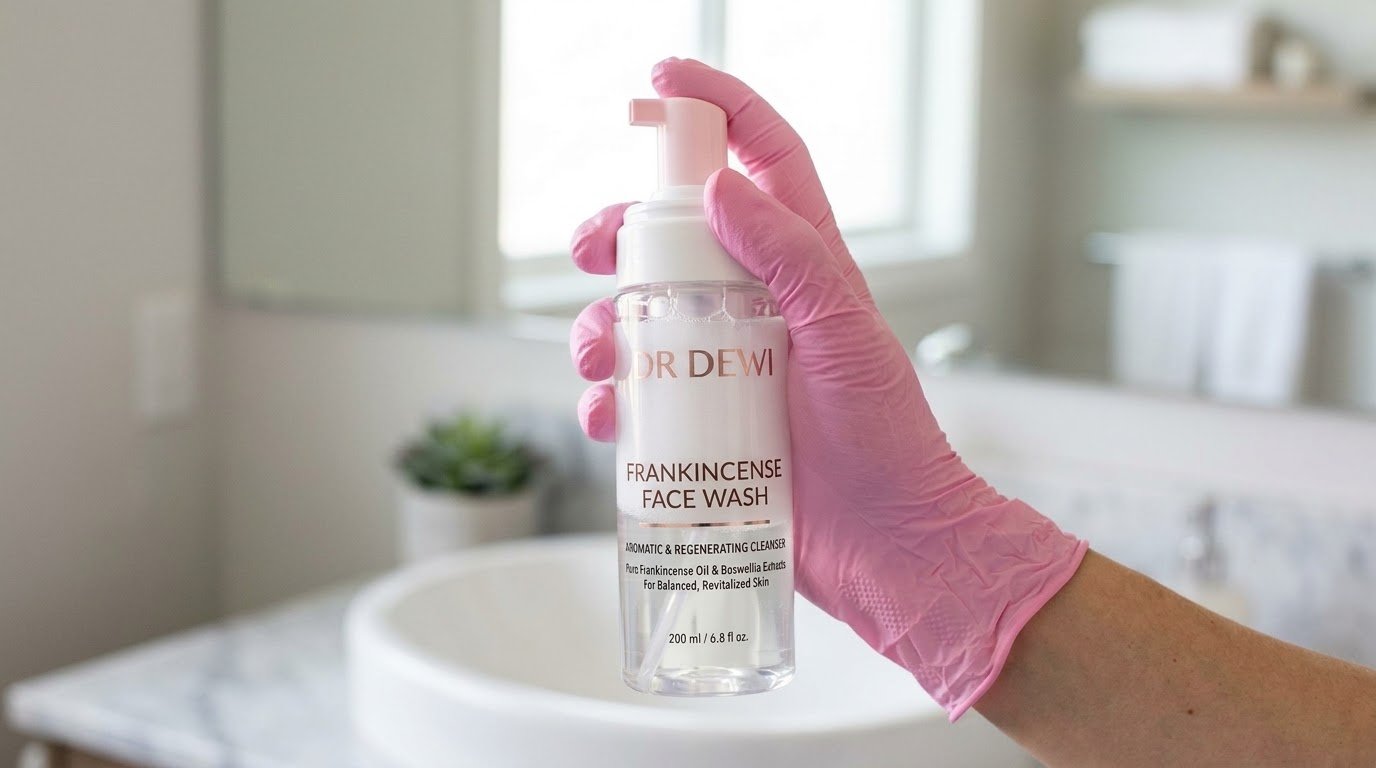
DIY Frankincense Foaming Facial Cleanser for Firm, Radiant Skin
Daily facial cleansing is the cornerstone of any healthy skincare routine. However, conventional liquid cleansers can sometimes feel overly heavy, while synthetic bar soaps can strip away essential surface lipids. Foaming facial cleansers have risen in popularity because they provide a lightweight, airy lather that spreads effortlessly across the skin, penetrating deep into pores to lift impurities without causing mechanical friction or irritation.
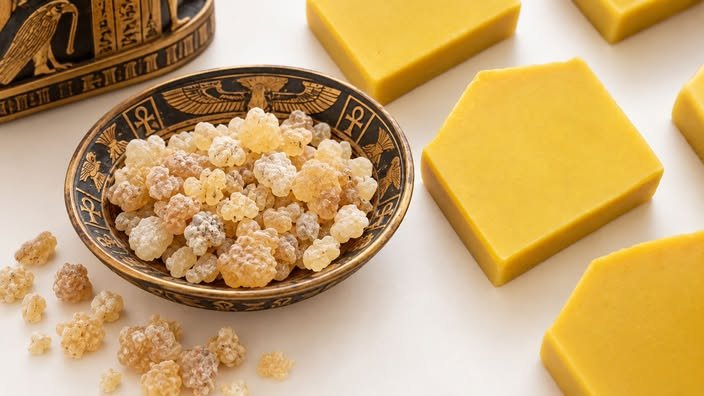
When infused with Frankincense (Boswellia)—historically celebrated as nature’s natural collagen—a foaming cleanser transforms into an advanced botanical treatment. Frankincense works effectively to firm loose skin contours, tighten enlarged pores, accelerate cellular regeneration, and balance surface oil production. Combined with soothing agents like Allantoin and gentle coconut-based surfactants, this quick-prep foaming facial cleanser is ideal for all skin types, including sensitive and acne-prone complexions.
This comprehensive guide covers the formulation science, key active ingredients, precise percentage and gram-based measurements, step-by-step manufacturing instructions, heating protocols, pH balancing, and answers to frequently asked questions.
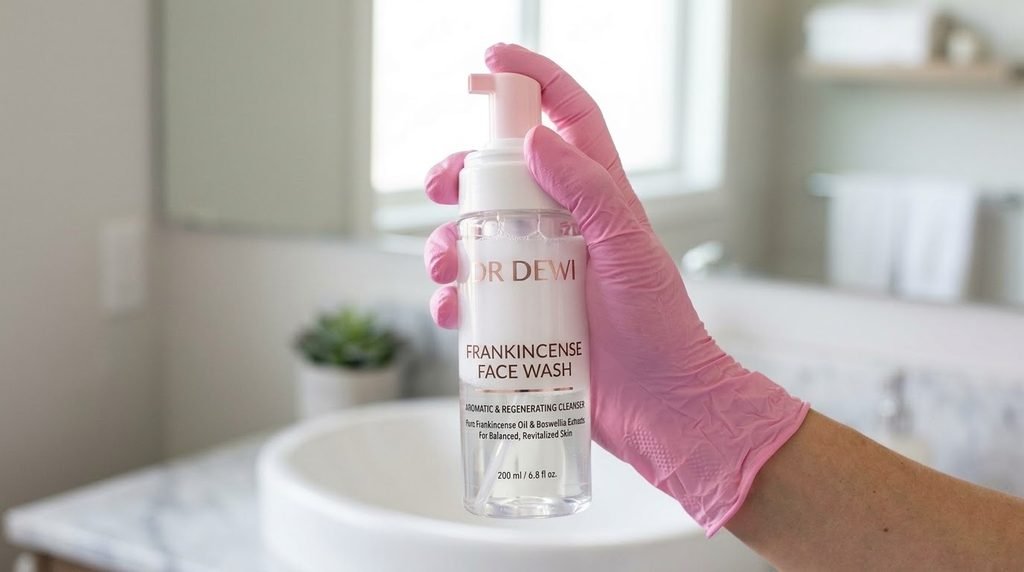
The Science Behind Foaming Cleansers and Frankincense
Foaming pump dispensers do not rely on chemical propellants. Instead, they force liquid cleanser through a fine micro-mesh screen mixed with ambient air to create a velvety foam. To work successfully in a pump dispenser, a formulation must be water-thin, completely soluble, and free from suspended solids or heavy gums that could clog the pump mechanism.
1. Why Frankincense Hydrosol Over Water Infusions?
Traditional raw Frankincense water infusions contain microscopic resin particles, natural gums, and pigments. Over time, these particles settle out and obstruct the delicate micro-mesh of foaming pumps. Pure steam-distilled Frankincense hydrosol provides volatile boswellic fractions, astringent active compounds, and anti-aging benefits in a perfectly clear, liquid state that preserves pump function.
2. The Role of Allantoin in Skin Healing
Allantoin is a powerful skin-soothing agent naturally derived from plants like comfrey. It works synergistically with Frankincense by promoting dead cell desquamation (gentle exfoliation), stimulating healthy cell proliferation, and calming redness or inflammation. It ensures that the cleansing process leaves skin feeling silky smooth rather than tight or irritated.
3. Gentle Non-Sulfate Surfactants
Commercial cleansers frequently rely on harsh sulfates like SLS or SLES, which can destroy the natural skin barrier. This formulation uses a combination of Cocamidopropyl Betaine and Coco-Glucoside—gentle, plant-derived surfactants that create a rich foam while preserving epidermal moisture.
Key Active Ingredients and Their Functions
- Frankincense Hydrosol: Tightens sagging skin, refines enlarged pores, and stimulates healthy cellular turnover.
- Distilled Water: Functions as a pure, ion-free solvent base that ensures ingredient stability and active performance.
- Allantoin: Soothes skin irritation, calms redness, promotes tissue repair, and leaves a silky post-wash feel.
- Cocamidopropyl Betaine (CAPB): A coconut-derived surfactant that builds rich, creamy foam and conditions the skin.
- Coco-Glucoside: A natural, non-ionic surfactant that gently dissolves excess oil, makeup residues, and environmental debris.
- Vegetable Glycerin: A humectant that seals in moisture and protects the skin’s natural lipid barrier.
Professional Formulation Measurements (Batch Size: 100g)
To ensure consistent quality, stability, and foam performance, ingredients must be weighed accurately in grams using a precision scale.
Phase A: Heated Solvating Phase
- Distilled Water: 37.02% (37.02g) — Function: Pure liquid vehicle and solvent base.
- Allantoin: 0.30% (0.30g) — Function: Anti-irritant, cell regenerator, soothing agent.
Phase B: Active Botanical Phase
- Frankincense Hydrosol: 50.00% (50.00g) — Function: Primary anti-aging, firming, and pore-refining active.
Phase C: Surfactant & Humectant Phase
- Cocamidopropyl Betaine (CAPB): 6.00% (6.00g) — Function: Foam booster, mild amphoteric surfactant.
- Coco-Glucoside: 3.00% (3.00g) — Function: Gentle non-ionic cleanser, oil remover.
- Vegetable Glycerin: 2.50% (2.50g) — Function: Humectant, prevents post-cleansing dryness.
Phase D: Preservation Phase
- Broad-Spectrum Preservative: 1.18% (1.18g) — Function: Prevents bacterial, mold, and fungal contamination.
Total Formulation Weight: 100.00% (100.00g)
Required Tools and Equipment
Preparing high-quality cosmetic products requires clean, accurate equipment:
- Precision Digital Scale (0.01g accuracy)
- Heat-resistant glass beakers (250ml capacity)
- Water bath setup (double boiler or hot plate)
- Glass stirring rods or stainless steel mini spatulas
- Digital thermometer
- pH testing meter or calibrated pH indicator strips
- Sanitized foaming pump bottles
- Spray bottle with 70% Isopropyl Alcohol
- Protective Gear: Nitrile gloves, face mask, and hair cover
Step-by-Step Manufacturing Instructions
Follow these clear, professional steps to formulate a clear, effective, and non-clogging Frankincense Foaming Facial Cleanser in under five minutes.
Step 1: Safety Precautions and Equipment Sanitization
Put on your protective gloves, face mask, and hair cover. Clean your work station and sanitize all glass beakers, stirring rods, scales, and foaming bottles with 70% Isopropyl Alcohol. Allow all items to air dry completely.
Step 2: Preparing and Heating Phase A (Solvating Allantoin)
- Weigh 37.02g of Distilled Water into a clean glass beaker.
- Add 0.30g of Allantoin powder into the water.
- Place the beaker in a warm water bath and heat gently to around 45°C–50°C.
- Stir continuously using a glass rod until the Allantoin powder dissolves completely into the liquid.
(Note: Allantoin is poorly soluble in cold water; mild heating ensures complete dissolution without leaving gritty particles).
Step 3: Cool Down and Addition of Botanical Hydrosol (Phase B)
Remove the beaker from the water bath and allow it to cool slightly to room temperature. Once cooled, add 50.00g of pure Frankincense Hydrosol into the beaker and stir gently to combine.
Step 4: Incorporating Surfactants and Humectants (Phase C)
- Carefully weigh and add 6.00g of Cocamidopropyl Betaine (CAPB) into the liquid base.
- Add 3.00g of Coco-Glucoside.
- Add 2.50g of Vegetable Glycerin.
- Stir slowly and gently in one direction to combine all ingredients without generating excess surface foam.
Step 5: Preserving the Formula (Phase D)
Add 1.18g of a broad-spectrum liquid preservative (such as Liquid Germall Plus, Geogard ECT, or Euxyl PE 9010) to the mixture. Stir thoroughly for 1 to 2 minutes to ensure even distribution throughout the liquid.
Step 6: Measuring and Adjusting pH
Insert a calibrated digital pH meter or pH strip into the liquid cleanser. The ideal skin-compatible pH range for a foaming facial cleanser is 5.5 to 6.0.
- If pH is above 6.0: Add 1 drop of a 10% Citric Acid solution, stir well, and re-test.
- If pH is below 5.0: Add 1 drop of a 10% Sodium Hydroxide solution to raise the pH.
Step 7: Packaging and Product Usage
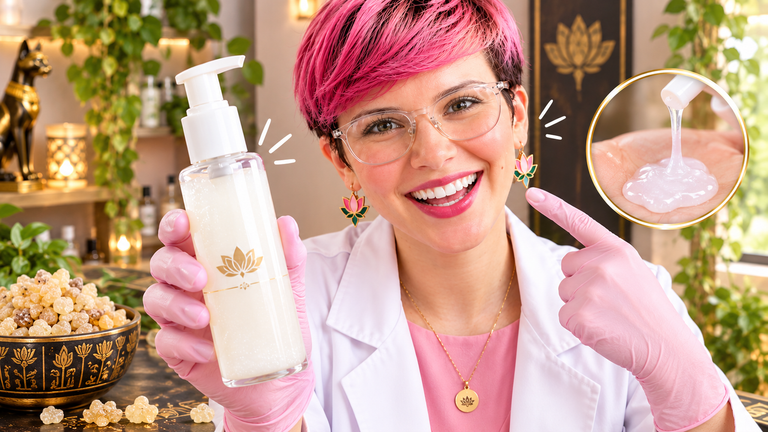
Pour the clear liquid cleanser directly into a sanitized foaming pump bottle. Attach the pump mechanism securely. Test the pump to verify that it converts the liquid into a soft, airy foam.
Benefits of Foaming Frankincense Cleanser for Skin
- Effortless Deep Cleansing: The micro-foaming action lifts daily dirt, excessive sebum, and makeup residue out of pores without aggressive scrubbing.
- Natural Firming and Tightening: Active Frankincense compounds tone sagging skin and improve overall skin elasticity over time.
- Refines Enlarged Pores: Helps tighten dilated pore walls and regulate daily sebum output.
- Soothes Inflammation: Allantoin calms irritation, making this formula comfortable for sensitive or acne-prone skin.
- Non-Stripping Hydration: Vegetable glycerin preserves the natural moisture barrier, ensuring skin remains comfortable and soft after washing.
How to Incorporate Foaming Cleanser into Your Routine
Daily Usage Guide (AM & PM)
- Wet your face with lukewarm water.
- Dispense 1 to 2 pumps of Frankincense Foaming Cleanser into damp hands.
- Gently massage the airy foam over your face and neck using upward circular motions for 30 to 60 seconds.
- Rinse thoroughly with cool water to refresh the skin.
- Pat dry with a clean towel and follow with a facial toner, serum, and moisturizer.
Preservation, Shelf Life, and Storage Guidelines
- Preservation Necessity: Because this formulation consists primarily of water and botanical hydrosol, a broad-spectrum preservative is mandatory to prevent bacterial and mold growth.
- Shelf Life: Properly preserved and packaged in a clean foaming bottle, this product maintains stability for 6 to 12 months.
- Storage Advice: Store in a cool, dry environment away from direct sunlight and heat sources. Avoid opening the pump container repeatedly once sealed.
Frequently Asked Questions (FAQ)
1. Can I use raw Frankincense water infusion instead of hydrosol?
It is not recommended for foaming pump bottles. Water infusions contain fine resin particulates and botanical gums that will clog the micro-mesh inside the foaming pump over time. Hydro-distilled hydrosol guarantees smooth, continuous pump performance.
2. Why does Allantoin require heating to dissolve?
Allantoin has low solubility in room-temperature water (around 0.5% at 25°C). Gently heating the water phase to 45°C–50°C ensures complete dissolution, preventing gritty recrystallization in your finished product.
3. Is this foaming cleanser safe for sensitive skin?
Yes. The formula combines mild, plant-derived surfactants with anti-irritant Allantoin and soothing Frankincense hydrosol, making it exceptionally gentle for sensitive or reactive skin types.
4. Can I add essential oils to this foaming cleanser?
Because this is an oil-free, water-thin formulation designed specifically for foaming pumps, adding essential oils directly may cause them to separate or cloud the liquid. If you wish to add essential oils, you must pre-mix them with a solubilizer such as Polysorbate 20.
5. Why is pH testing critical for foaming cleansers?
Human facial skin maintains a natural acid mantle with a pH between 4.5 and 5.5. Cleansers adjusted to pH 5.5–6.0 respect this delicate barrier, preventing bacterial imbalance, dryness, and irritation.
Final Thoughts
Formulating a DIY Frankincense Foaming Facial Cleanser is a fast, highly rewarding process that brings professional-grade botanical skincare into your daily routine. By combining firming Frankincense hydrosol with soothing Allantoin and gentle plant surfactants, you create a lightweight, high-performance cleanser that refreshes, tightens, and protects the skin barrier. Whether crafted for personal self-care or offered as a signature product in a handmade cosmetic line, this foaming cleanser delivers clean, radiant results.